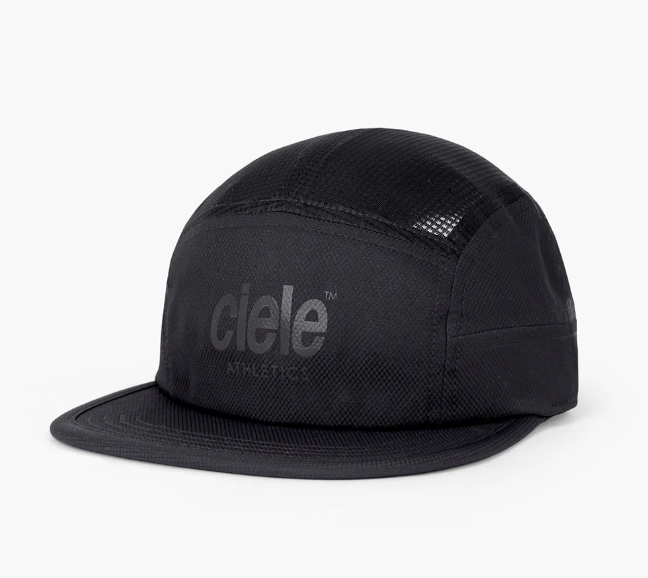
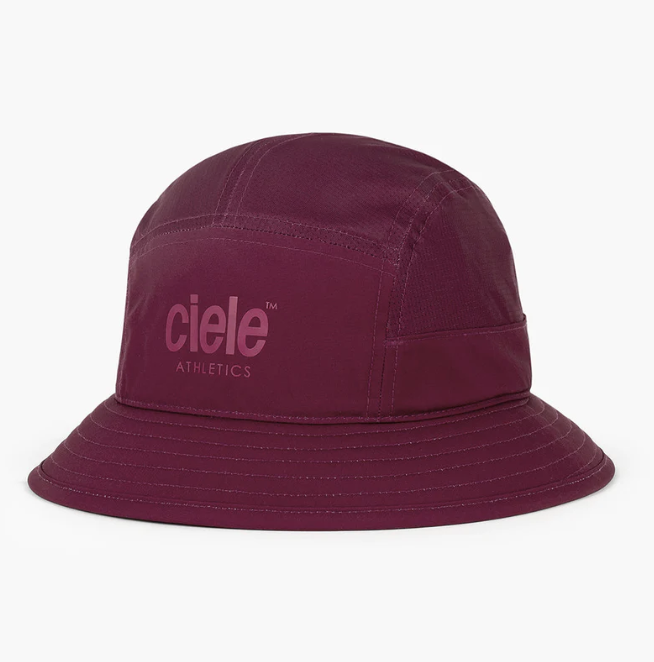
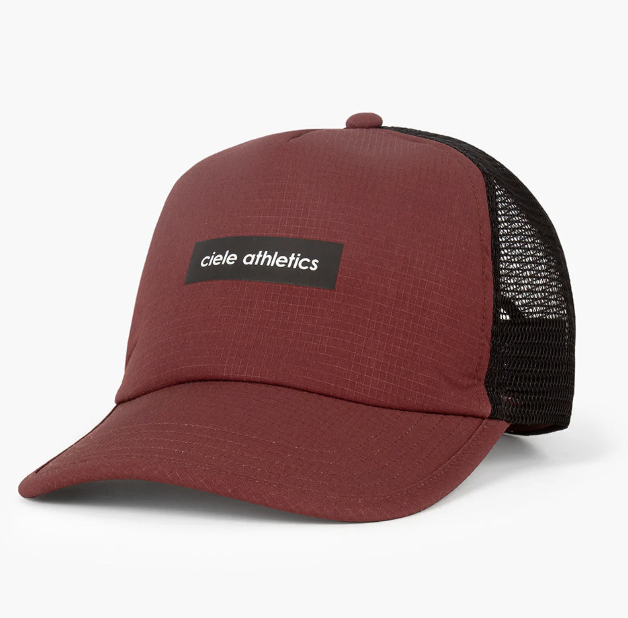
the name wasn't always ciele
the original name was miles. it made sense: go on for miles, run for miles. they had a first production run ready, four colorways sitting on a boat crossing the ocean toward montreal, when a more thorough trademark search flagged a problem. the name miles was registered in sports by the denver broncos, whose mascot is called miles. their legal counsel said they had a strong case if it ever went to court. jeremy and mike, largely broke when they started the company, heard "court against the denver broncos" and immediately started thinking of a new name.
"ciel" means sky in french. up, headwear, sky's the limit. jeremy liked the five letters as a word mark. he added an E at the end to make a word that doesn't exist anywhere, can't be claimed by anyone else, and works visually in a way that feels like it always belonged. a second production run was ordered. the first one, with the miles label, still exists somewhere in a montreal warehouse. they've gifted a few over the years and used them to tell the story at popups. they've never thrown any out.
why hats
if you look at marathon photos from the 1970s and 80s, more than half the runners are wearing hats. painters caps. promo caps with cardboard brims. hats that have no business being on someone's head for four hours in the july heat. the major athletic brands weren't paying attention. they built shoes and apparel, and then at the end they went to a factory, picked a standard block off the shelf, added a logo, and called it a hat.
jeremy had a background in the ski industry, where technical apparel gets engineered for extreme conditions. he saw the gap. dan merritt, ciele's head of marketing and a friend of jeremy's for over 25 years, puts it simply: "no one was really saying, i want to go out there and make a really great technical performance running hat. it was an overlooked category."
the problem, as designer julie st. louis explains after eight years developing their caps, is that hat factories don't operate the way footwear or apparel factories do. most of them have the same blocks they've always had and they put your logo on it. "you send a tech pack and it took four months to get the sample back," she says. "and then it took many years to develop, to find a factory that was able to actually do new concepts." for the elite cap launch in 2022, ciele couldn't find a hat factory that could make the brim they'd designed. they had a footwear factory build the brims and shipped them to the headwear manufacturer to finish the assembly.
jeremy's own words from the launch in 2014 say it plainly: "this idea has been percolating for the better part of 2 decades. we weren't sure we had the guts, or the depth to make ciele athletics happen the way we wanted. the way we needed to." just a cap to start. "to say we're pacing ourselves might be an understatement. we're comfortable with that."
art and science
ciele positions itself at the intersection of art and science. julie st. louis trained as an industrial designer, spent 25 years in footwear including work on the merrell trail glove, and describes industrial design as the bridge between those two things. "it's always human against an object," she says. "so there's a table, a car, a bicycle, footwear. how can the object help the person have a better life."
her design process involves deliberately stopping design work for a month each year to travel somewhere unrelated to running. brazil for kite surfing. california to build a backpack from scratch. the point is to absorb things that have nothing to do with hats. color comes from architecture, furniture, cars, art movements, sunsets photographed on her phone. ciele builds its own internal color direction rather than following an outside trend firm. the result is a palette that feels cohesive and recognizable across seasons in a way most running brands never achieve.
when competitors copy ciele, and they do, extensively, "they're copying just our visual and our colors," julie says. "but they're not copying our technologies." the coatic plus and coatic exp fabrics, developed with their manufacturing partners, are moisture wicking, temperature regulating, and anti-odor. a carbon blend in their fleece handles winter running, when you start cold and overheat by mile four. the soft foam brim, adapted from footwear construction, folds into a pocket and recovers its shape. it floats. you can run in it, canoe in it, put it in the washing machine. your first ciele cap from 2015 still holds up today, and that's not an accident.
the product line
ciele launched apparel later than most people assume. the not-so-basic tee, made from recycled polyester and recycled cotton, came out in 2020. a technical elite collection followed in 2022. they're now on their sixth apparel season and already designing spring/summer 2027.
the life editions collection is worth its own mention. it's the design team making what they actually want to make, without asking first whether a run specialty buyer can move it. more fashion lens, fewer commercial guardrails, real technical performance underneath. it's the part of the line that signals ciele is playing a longer game than most.
for spring 2025 they restructured into three main franchise families plus an elite tier. the new elite cap was rebuilt from scratch: brim merges into the side panel, an adjustment mechanism works like a lace so the brim forms to your head shape when you tighten it, sweat band material extends out to the side panels using the same carbon-blend fabric from the apparel line. julie describes the fit as "a glove that you put on your head." sizing is expanding beyond one-size to give people with different head shapes an actual fit, not just a workaround.
independent by design
ciele went from eight people in 2019 to just under thirty now, including four at their montreal flagship store esposas. esposas carries third-party footwear, nutrition, and accessories alongside the ciele line. if someone comes in looking for a shoe they don't have, they call other montreal shops to find it for the customer. it's a real run resource, not a brand showroom.
people reach out about investment regularly. dan is straightforward about the internal conversation: outside money can change the dna of a brand, and can put pressure on sales targets at the cost of what made the brand worth backing in the first place. jeremy describes himself as unemployable. the idea of reporting to outside shareholders doesn't sit well. they use the phrase "baby steps" internally all the time, comfortable with the idea that doing things right takes longer. as jeremy puts it: "it takes 20 years to build a brand." ciele is ten years in.
their collaborations, which they call joint adventures, reflect the same patience. the best ones with tracksmith, reigning champ, and community clubs like berlin braves aren't logo swaps. they find a story, sit at a design table together, and make something that couldn't exist without both sides. "we don't want to just do those quick sprints," dan says. "we want to find ways that we can really put a product out that we're like, this is meaningful."
our take
the first ciele cap i ever put on changed how i thought about running headwear, and that's not a sentence i say lightly. the go cap has been in our rotation for years and it still earns its place on every long run. what we respect most about ciele is that they've taken the same obsession that built the best running hat in the world and applied it to everything else they make. a decade in, self-funded, b corp certified, still building for the next fifty years. that's the kind of brand we're here for. everybody run.
explore ciele on syndicate, then go shop them direct at cieleathletics.com.