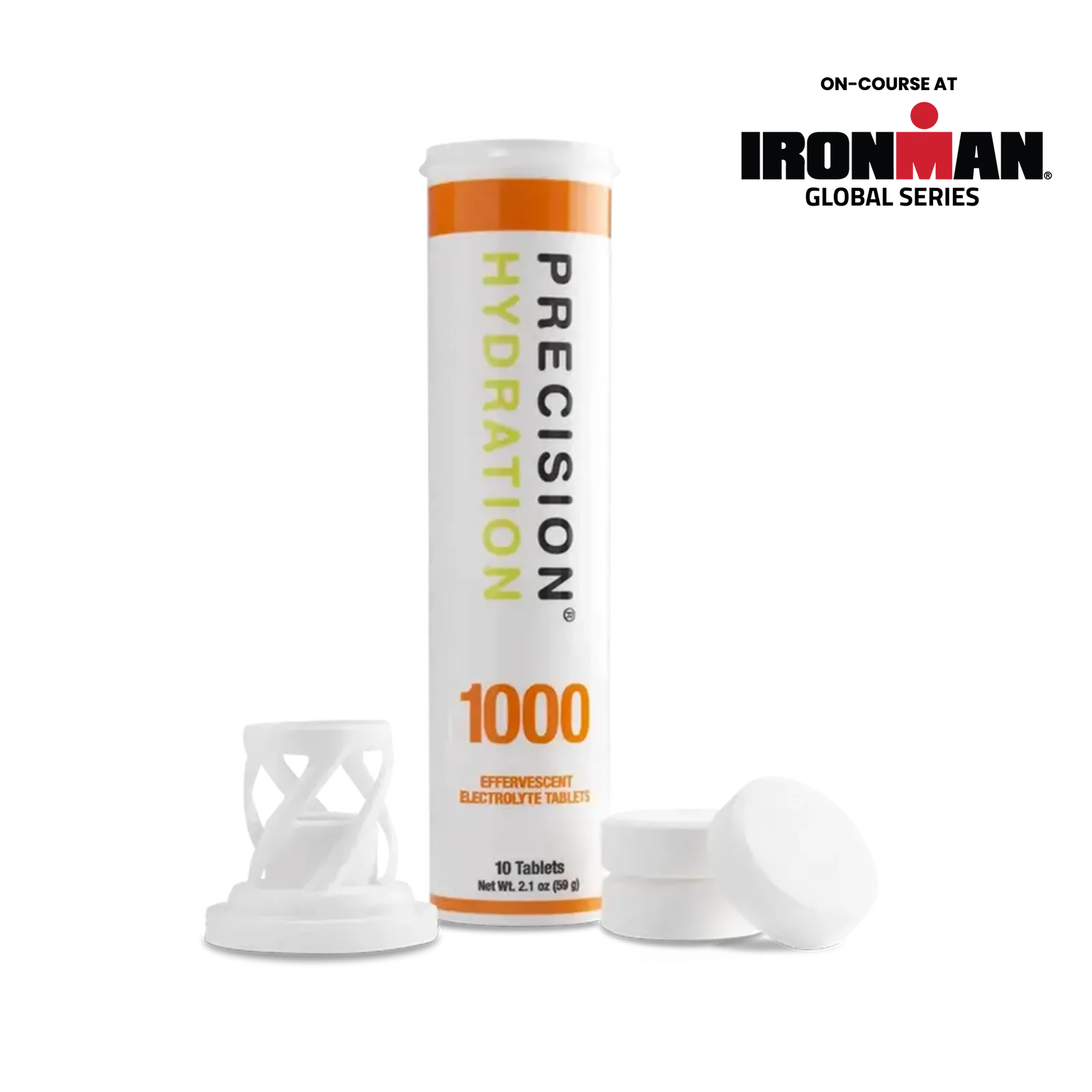
precision fuel & hydration is a uk sports nutrition company founded in 2011 by andy blow, a sports scientist and triathlete who kept falling apart in races despite doing everything he was supposed to do. the team at precision fuel & hydration makes electrolytes, gels, and drink mixes built on a single idea that almost nobody was acting on when they started: your body is not the average body, so you should stop fueling like it is. the personalization features are not marketing that gets bolted on later. personalized fueling is the whole company, and it started with andy’s own triathlon failures.
the problem
blow had the credentials. he had studied sport and exercise science, made his living as a sports scientist, and raced triathlon seriously, and he still blew up. he was getting a lot of cramps in races, and worse, while racing in the heat he had a couple of scary brushes with hyponatremia, the dangerous drop in blood sodium that comes from taking on more fluid than your body can handle. the standard advice, the stuff every athlete was handed, was the thing doing it to him, and even his own field had not covered fluid and electrolyte balance in any real depth.
back in the 90s especially the advice was just to drink lots. when i look back i was habitually diluting myself the whole time.
— andy blow, founder, precision fuel & hydration
that is the crack the whole company grew out of. not a gap in the market spotted from the outside, but a problem he could not solve personally with the sport’s standard playbook. the question that became precision was a personal one before it was commercial: why does the same plan work for one athlete and wreck another.
before precision
blow made his early living in motorsport, working as a sports scientist for benetton’s formula 1 program. a later move, joining the management team of one of the drivers they worked with and subcontracting in alongside him at another team, did not work out the way he hoped. he left f1, set up his own sports science lab, and started testing athletes on his own terms. precision grew directly out of that lab.
the sweat lab
the answer to his own problem arrived late in his racing career, when a doctor friend gave him a sweat test. it was a real eye-opener, and it rewrote his entire electrolyte prescription. the technology behind it came from outside sport entirely: sweat testing equipment originally designed to diagnose cystic fibrosis. blow licensed it exclusively for sport after seeing how differently athletes tested on it.
what i found fascinating was that we could test 10 athletes and get 10 very different results with this. my feeling at the time was, why is no one doing this with athletes?
the variance from one athlete to the next was the whole discovery. the same drink, the same electrolyte tab, the same generic advice to stay hydrated produces completely different outcomes depending on who is drinking it. that is the thesis in one move. measure the individual, then prescribe for the individual. give athletes a number instead of a slogan. but the test is only the start of the relationship, not the end of it. people wanted a sweat test, blow says, and what they really wanted was the full package: what do i do with this data, and what products do i use off the back of it. customers pushed precision toward manufacturing, telling them plainly that if you guys made a drink, we would buy it from you. knowing your number is one thing. knowing what to do with it on race morning is the part the rest of the fueling category still skips.
the bet
building it was not clean. a friends-and-family raise in 2011 funded the first production run, the website, and the logo. from 2011 to 2014 precision was a side hustle, and a small one. at one early point the company’s entire stock sat stacked in a corner of an office, and jonny tye re-labelled product by hand in blow’s living room to ship it to different countries.
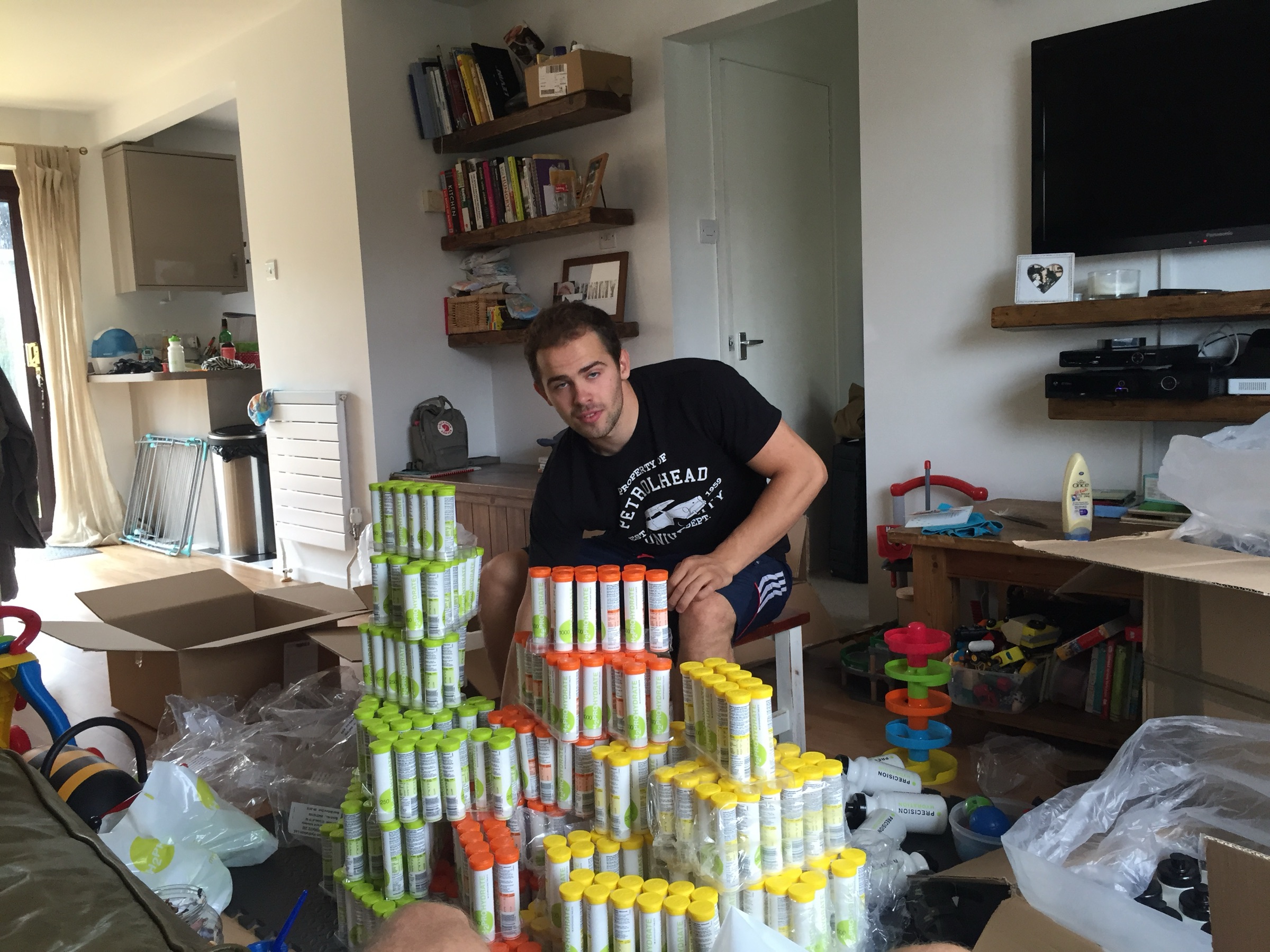
jonny tye re-labelling product by hand in andy’s living room in the early days.
tye had arrived in a roundabout way. blow’s cousin was a marathon kayaker and a senior world champion, tye was his training partner and a world championship silver medallist himself. he turned up to help out at one of precision’s earliest expos and proved to be a really good salesman. after that tye kept asking for more shows and more work. he was studying engineering at the time, with a conventional graduate path waiting at the end of it. as blow tells it, tye made a hard left away from designing mining equipment to join a pirate ship and sell some electrolytes to people.
when a deal with a prospective investor fell through, blow and tye took the liability on themselves: blow remortgaged his house, tye borrowed, and they bought out the early investors. that is the point where tye stopped being an employee and became a partner. blow calls it the mortgage-the-house moment, and the way he ran the numbers was deliberately unromantic.
the risk was also relatively contained. the worst thing here is, if we don’t bleed too much money along the way, we sell through, we don’t reorder, and we kind of call it quits.
survivable downside, total commitment. they took the bet.
the band
blow is the name on the founding story and the face of the brand, and he is quick to point out how much that framing leaves out.
sean’s always referred to me as kind of like the lead singer of the group as it were. but there is very much so a band there that have done this all together.
the band, in his telling, is four people. blow and tye, plus dave colley, who came in on marketing and creative and brought real digital, copywriting and design capability to a company that had none. and sean o’mahony, who first distributed precision in canada on his own before folding that operation into the central business, and who now chairs the company and runs its canadian operations. those four took it from 2014 and 2015 through to about 2020, the years that decided whether any of it would work.
tye’s arc finished where it was always heading. he ran more and more of the company, first as unofficial and then official coo, and in january 2026 he became chief executive. blow describes the handover as part succession planning and part life stage: the business now benefits from a leader with an operational focus, tye wants that ownership, and blow is shaping his own role around his family and the parts of the work only he does. their skills split cleanly. tye brings logic, organization, process and systems. blow brings the creativity and the sports science. what blow will not accept is the stereotype that usually gets applied to a situation like this.
it would be belittling and remiss of me to call him my number two. we are partners in this in every sense.
the product
the product line reflects how the company grew into its own thesis. it started as precision hydration, electrolytes in multiple strengths matched to how much salt you actually lose. the rebrand to precision fuel & hydration came when they moved into carbohydrates.
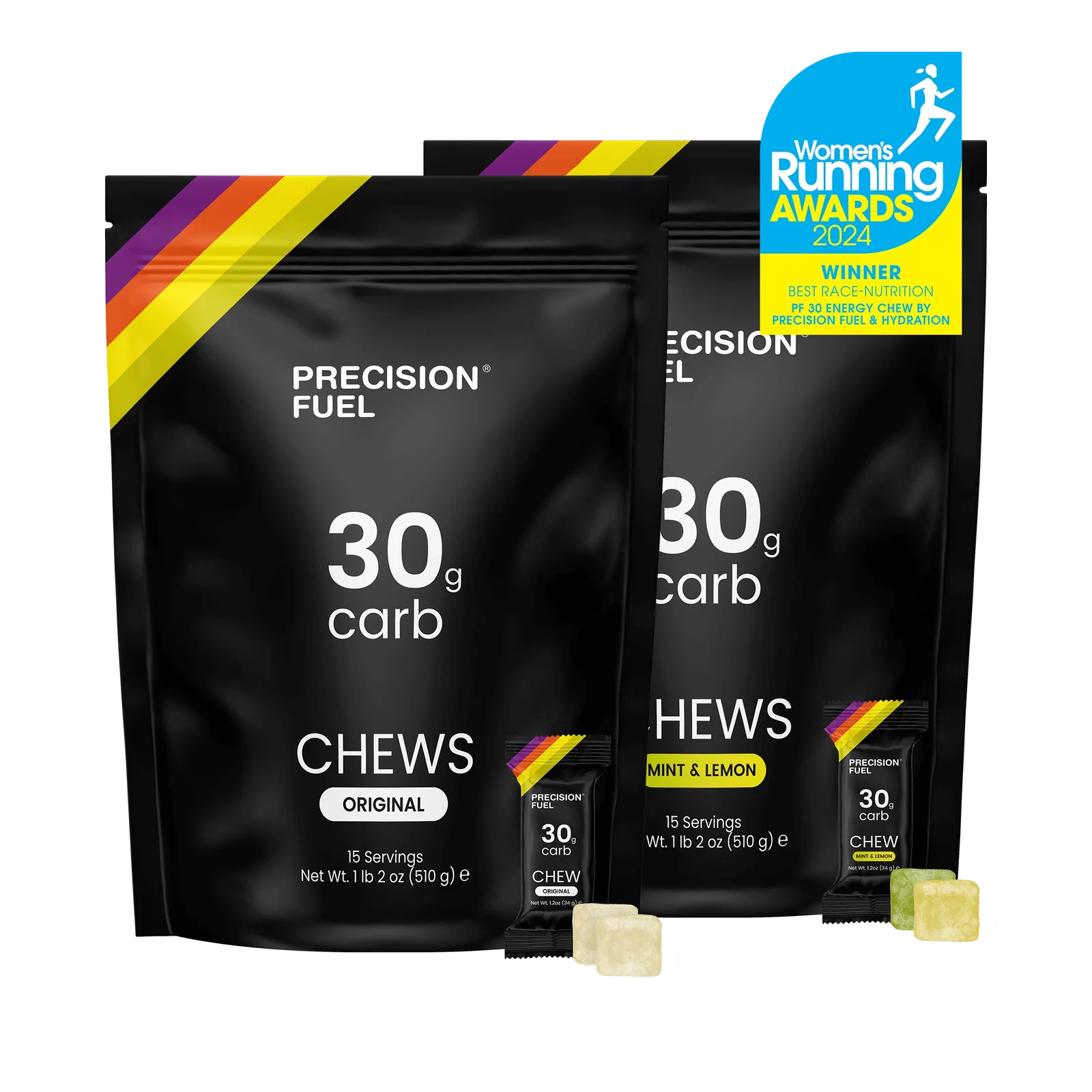
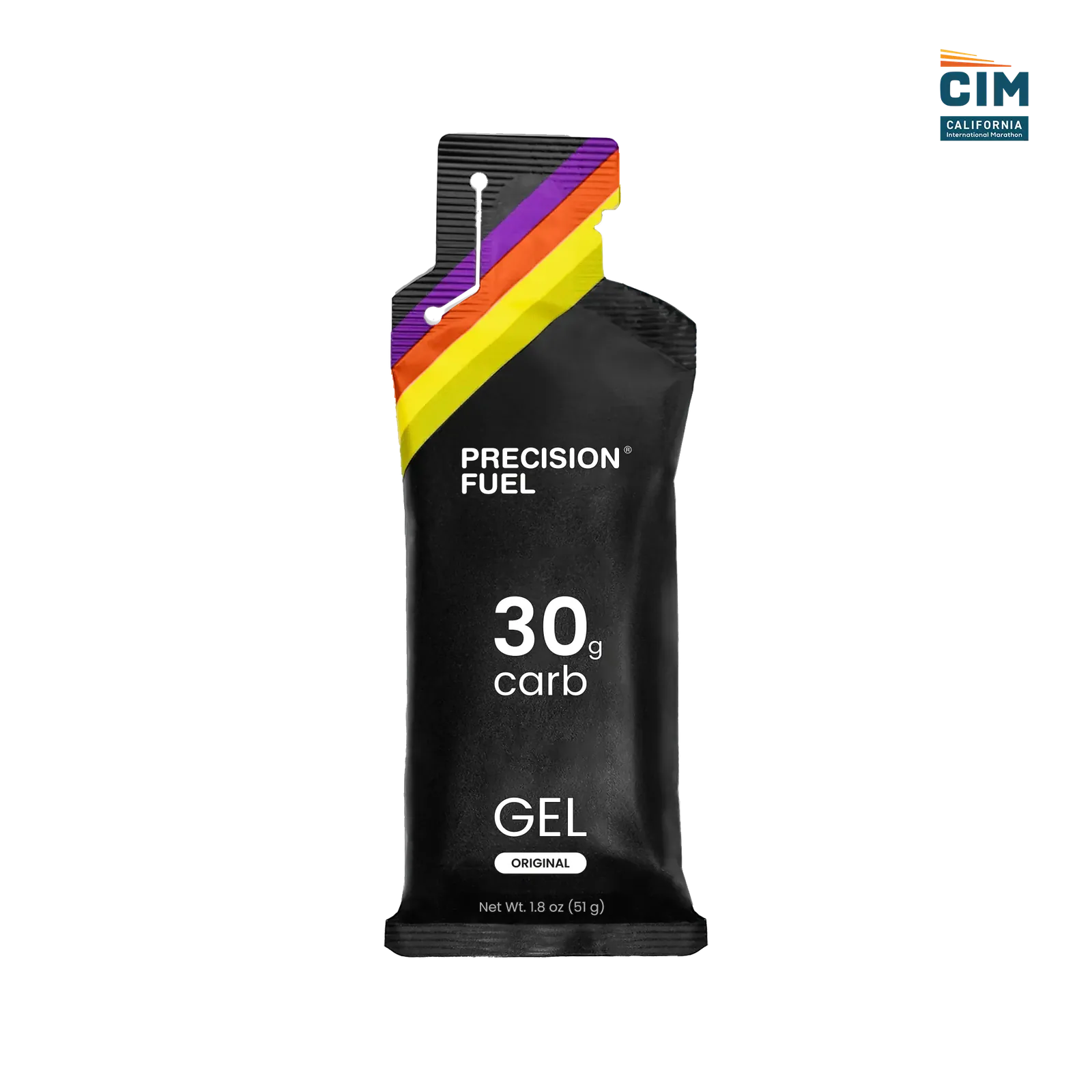
the gel market, blow thought, was homogenous and improvable on two specific counts. taste, because most gels are essentially syrups carrying powerful and not especially pleasant flavours, and labelling, because the numbers an athlete actually needs are usually buried in a tiny table on the back where nobody can read them mid-race. so the team invented and refined their own in the kitchen, then outsourced the manufacturing, and put the macros where you can find them. it worked fast. they went from zero to a million gel units sold in short order, leveraging a loyal base of hydration customers and timing it neatly with the high-carb fueling conversation that was just taking off across endurance sport.
the pro teams
precision’s first real revenue base was not runners or cyclists. it was professional sport. the entry point was a red bull sweat testing camp in the us, where blow met the director of nutrition at a major american university, and from there it spread the way trust travels inside pro sport, one staff member recommending another. early north american clients included the new york knicks and washington’s nfl team.
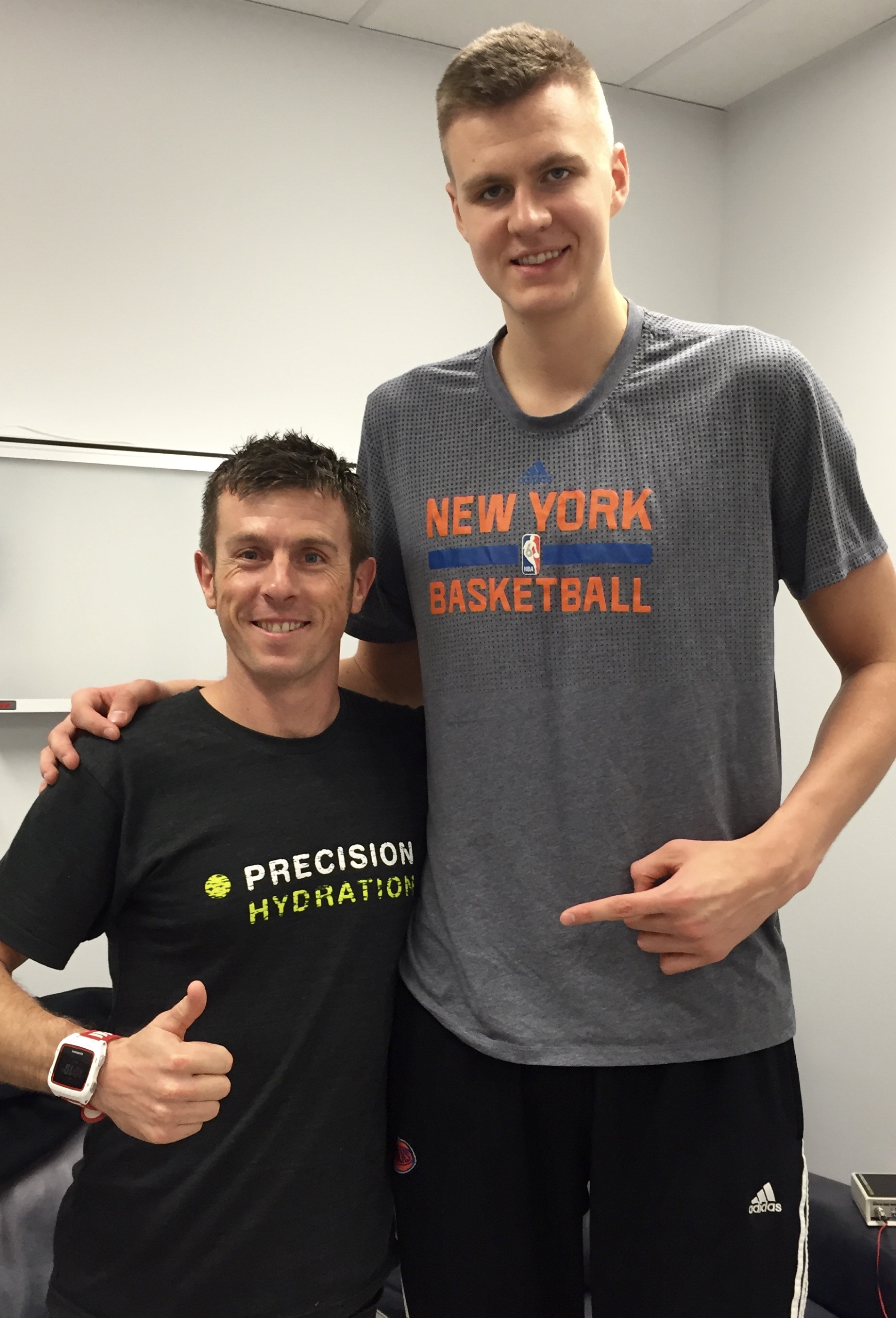
andy with kristaps porziņģis, the unicorn, of the new york knicks, one of precision’s early north american clients.
today precision works with a large share of major american pro sport, including most of major league baseball’s clubs along with teams in the nfl and mls. from roughly 2015 to 2019, that work carried the company. it was the business. now it’s a small subsection.
the pivot
the turning point came during covid, when live sport shut down and the pro sports revenue base was suddenly at risk. dave colley, then leading marketing, pushed a hard pivot to selling direct to consumers. blow is clear that it never felt like failure, even though the numbers that year looked like nothing happened. they reacted quickly and decisively to what could have been a catastrophic situation, and they were fortunate in one specific way: they were not heavily reliant on brick and mortar retail, so they had no stock tied up in closed shops and no inventory going past its expiration date. their size let them make the move fast. revenue flatlined that first year, because what they lost in professional sport they gained in direct to consumer.
coming out of the pandemic, pro sport returned and the consumer business had scaled underneath it, leaving precision with two strong legs instead of one. with strong momentum, they doubled down on the fuel line at that point. today the company has over fifty employees, most of them endurance athletes themselves, ships to more than ninety countries, holds stock in five key markets, and has grown exponentially over the past few years. it has never taken outside capital.
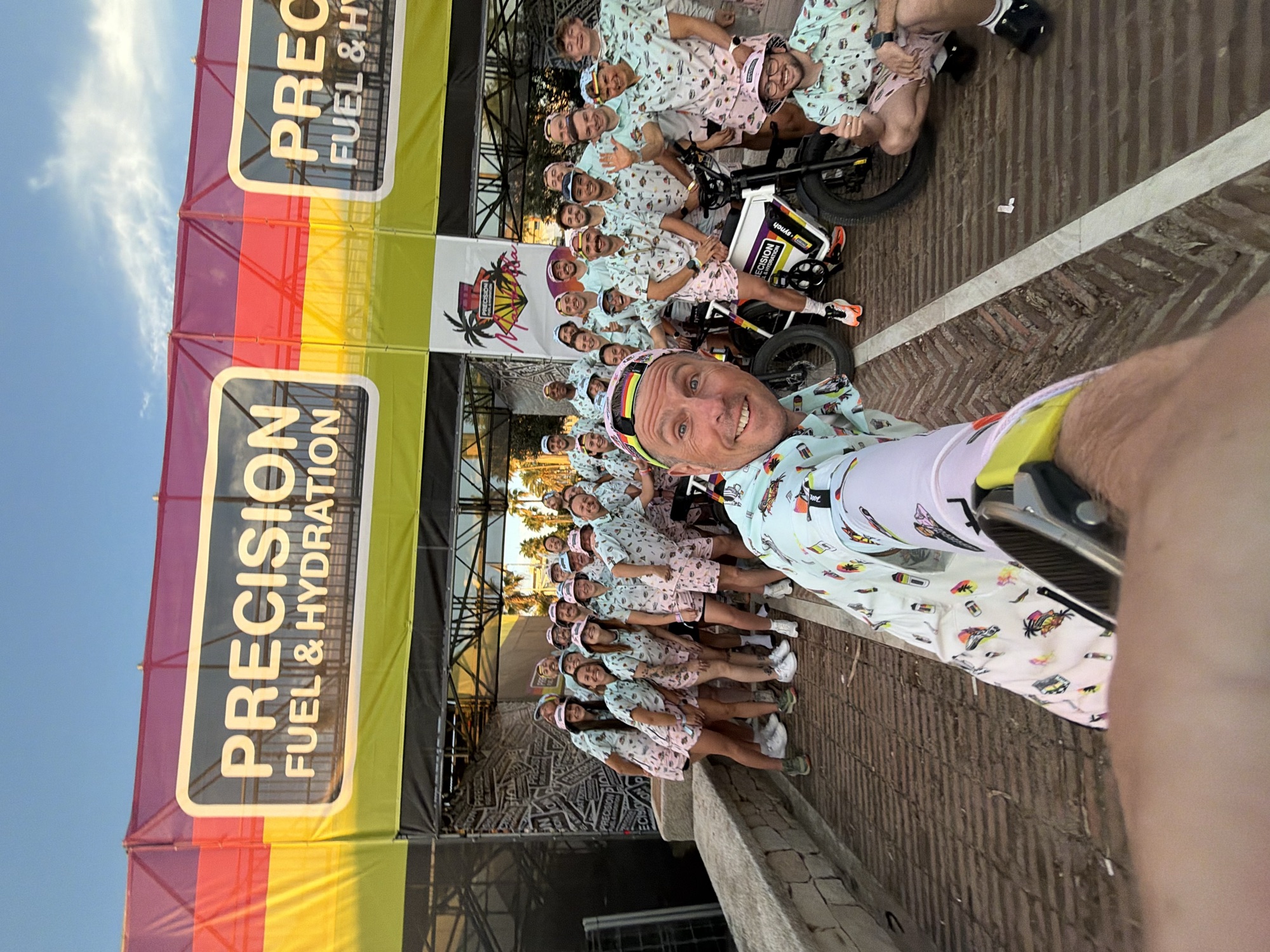
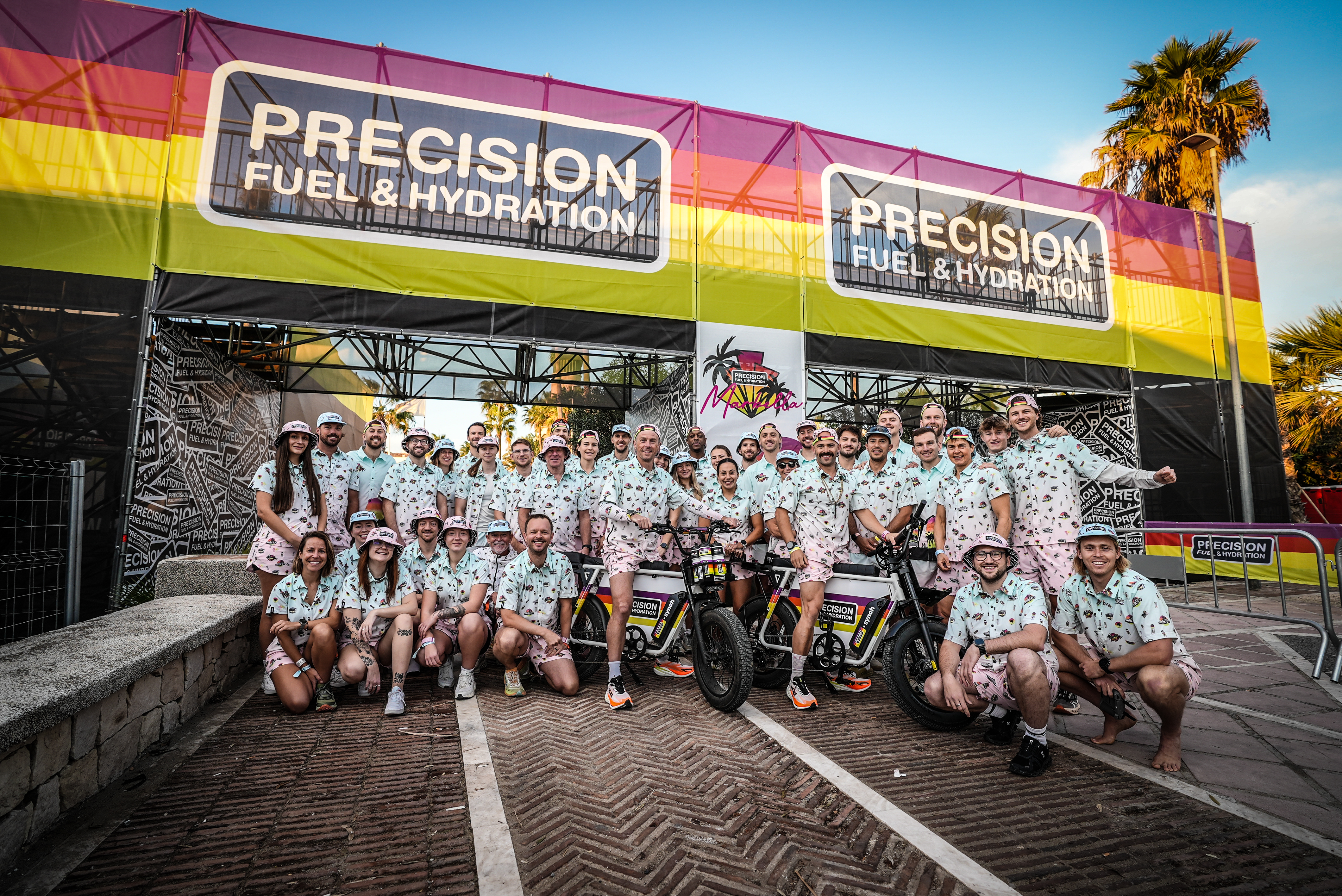
the precision team, close to fifty people, at the ironman 70.3 world championship in marbella in 2025.
the team’s commitment to the athlete shows up in one weekend. in 2025 precision was title partner of the ironman 70.3 world championship, and the whole team, close to fifty people, went out to marbella for it. when precision-sponsored athlete jelle geens broke the tape to win, it was blow and tye holding the finish line. the two men who had once remortgaged and borrowed to keep the company alive, standing at the end of a world championship with their company’s name on it. blow still describes precision as, if not a startup, then a scale-up, even when the logo is sitting alongside names like ironman, hoka, breitling and qatar airways.
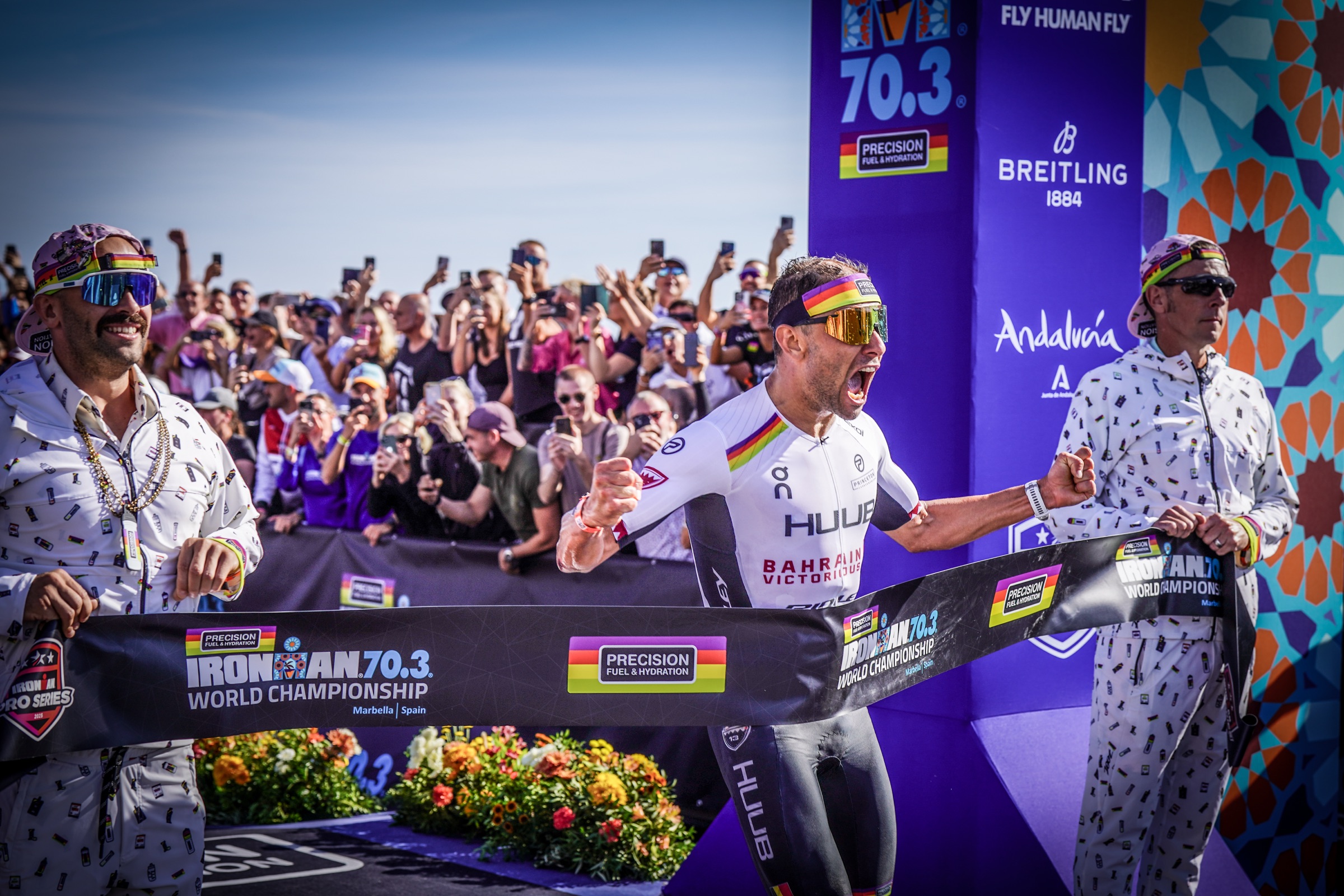
andy and jonny holding the tape for precision-sponsored athlete jelle geens, the 2025 ironman 70.3 world champion.
appropriate, not maximum
there is a carb arms race right now, and precision sells carbohydrate, which makes blow’s position on it worth hearing. he starts by pointing out how far the sport has swung. in the late 90s and early 2000s, the game was seeing how little you could get away with eating and drinking while still performing, athletes deliberately training underfueled in the belief it improved adaptation. a race to the bottom, as he puts it, rather than a race to the top, and one the sport now looks back on as fairly erroneous. the science and the athletes then moved up together: 60 grams an hour, then 90 with mixed carb sources, then 120 to 150 and beyond in elite circles.
directionally, blow thinks more carbohydrate is correct, especially in running, where underfueling has been the historic norm, and among amateurs precision still sees more underfueling and underhydrating than the reverse. even holding that view, blow is quick to counter. more carbohydrate is not a magic bullet, and it does not compensate for lacking fitness, bad pacing, or poor tactics. athletes will always look at whatever the current extreme is and try to do more, or claim they are, and what the very top end is doing is not always a great indicator of what everyone else should do. the industry has its own incentive to keep the number climbing, because it means people will buy more gels, and blow says plainly that the idea has been oversold and he expects some correction eventually. the right intake depends on how fast you are, how big you are, and what you are doing out there. some smaller, slower-moving athletes cope perfectly well on one or two gels an hour. there is, as he puts it, a goldilocks amount. precision’s free fuel & hydration planner exists to help you find yours.
he reaches for a comparison every runner will recognize: shoes. maximal cushioning for decades, then the barefoot and minimalist swing, and now an industry settling into the compromise in the middle. the same pendulum runs through fueling and hydration. people often have to overshoot in one direction before coming back to what is appropriate for them.
we’re not really pro high sodium. our message is appropriate sodium.
that sentence is the company in miniature, and he makes the same point about most performance decisions. not pro-maximum on any variable, pro-appropriate on all of them. it is a harder thing to market than just chasing a bigger number, for the reason blow gives himself.
humans love a simple answer to a complex question.
why the company exists
the clearest argument for any of this is an age-group triathlete from noosa called luke henderson. he had dealt with severe hyponatremia repeatedly, seriously enough for multiple hospitalisations and for his partner to worry the sport was becoming dangerous for him. his numbers came back with both an unusually high sweat rate and very high sweat sodium losses, extreme enough that the precision team was initially skeptical and went back to verify them through testing. then they built him what blow calls one of the most aggressive hydration plans they have ever designed for an athlete, in both sodium and fluid volume on the bike. henderson stopped ending up in the medical tent and started performing much better.
it was not linear. at kona he used a different sodium product than the plan expected and ended up with a dangerous potassium-related issue, which the team reverse-engineered afterwards to work out exactly what had happened. the following year he got it right.
cases like luke are really why the company exists in the first place.
the founding job, as blow describes it, was to analyze, understand, educate, and then provide a solution for people whose physiology is working against them in these races.
the same instinct shows up in how they work with elite athletes. blow met rachel entrekin at western states about three years ago, just after her first cocodona win, while she was volunteering at the foresthill aid station. he and his brother had her explain the food and drink options on camera before he knew who she was. in conversation afterward she told him she struggled with nutrition, so they exchanged numbers and blow connected her with emily, one of precision’s sports scientists. the support was informal at first, product and advice, while the company learned what 200-mile racing actually demands. before one of her cocodona wins she accidentally left all her nutrition behind on a driveway before traveling, and blow redirected her to a retailer in phoenix, where she effectively bought out the store. precision became her first paying sponsor, and others came in after that. blow is careful about how much credit he takes there, calling entrekin a generational talent whose success is very much her own, while allowing that precision has played more than the average supporting role through nutrition support and emily’s involvement. it is the pattern he wants: a genuine product user first, an advocate second, an ambassador only if it works for both parties.
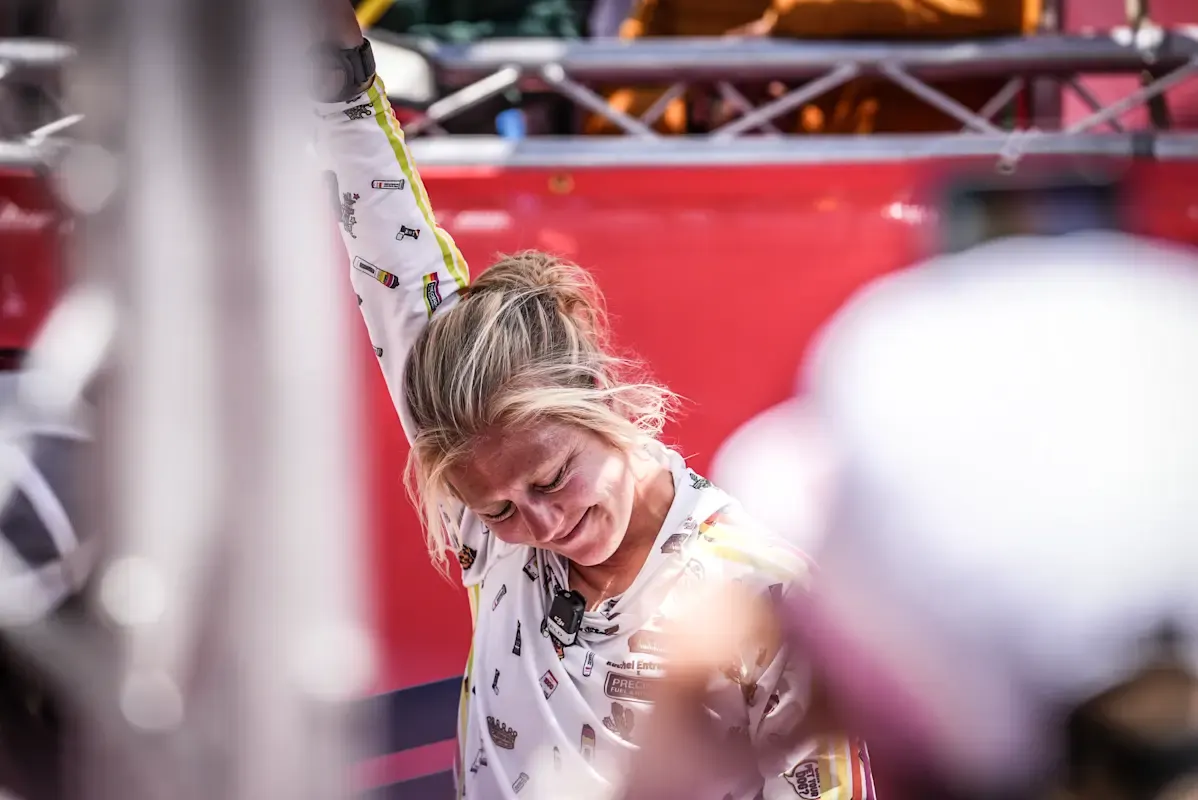
3x cocodona 250 champion rachel entrekin.
our take
we feature precision because it is the rare sports nutrition brand that leads with a question instead of a claim. everything about how they operate, the sweat testing, the refusal to pretend one formula fits everyone, the willingness to tell you that you might need less than the person next to you, runs against the grain of a category that mostly wants to sell you more. blow says precision is from the community it serves rather than a company buying its way into association with one, and after two long conversations and a lot of miles on their product, we believe him. we have run with their gels deep into long days in the mountains and trusted their electrolytes when getting it wrong would have led to a very bad outcome.