speedland is a portland-based trail running footwear company built by two industry veterans who spent 25-plus years designing shoes at bigger brands before deciding to make the shoe they actually wanted to run in. kevin fallon and david dombrow run a lean operation out of a loft space inside the chris king bike parts factory in portland, the same building where chris king still manufactures precision bike components every day, just the two of them plus a couple of contractors handling the parts of the business they're less excited about after two decades in footwear. they don't chase venture money, they don't blanket the sport with sponsorships, and they don't push for shelf space. they make the best shoe they can and let the product do the arguing. in a corner of running that's suddenly flush with marketing cash, speedland is the brand betting that quality and function still win.
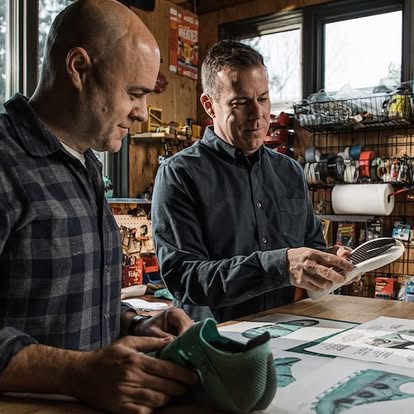
inside the loft at the chris king bike parts factory, where speedland's small team engineers every shoe.
fallon and dombrow have worked together for over 25 years across multiple brands, including nike, puma, and under armour. their skill sets overlap but split cleanly. kevin leads on innovation and product engineering, david owns creative direction and inline design. that long partnership is the whole foundation of the company, two people who've been building shoes together long enough to skip the politics and just make decisions.
it's super rare. we've worked together for 25 years, across multiple brands. in this industry, that just doesn't happen. most people don't last one job together, let alone five.
— kevin fallon, speedland co-founder
the thing kevin kept coming back to is the "telephone game." at big brands, athlete feedback passes through middle management and agents before it ever reaches the person who can change the shoe, and it gets watered down at every step. speedland cut all of that out.
at a big brand, an athlete tells someone in marketing something's wrong with the shoe, and by the time that feedback reaches the person who can actually fix it, it's been through five people and it doesn't even sound like the original note anymore. here, someone runs a prototype and tells me directly. i can change it that afternoon.
— kevin fallon, speedland co-founder
design work in progress at the portland studio.
that shows up in the details. they've partnered with companies working at the edge of performance technology, boa, carbitex, michelin, rather than cutting corners on any single component. and they're honest that not every experiment lands. they built the GL, a midstack all-mountain shoe, and while it has real devotees, it never sold at the pace of their max stack shoes. they also promoted cuttable lugs early on, an idea borrowed from mountain bike tires, letting runners trim lug height to match their local terrain. most customers never touched them.
it's a one-way decision. once you cut the lugs, you can't go back. that's a big commitment to ask someone to make on a shoe they just bought. turns out most people weren't ready to make it.
— david dombrow, speedland co-founder
it's the kind of admission most brands wouldn't volunteer, and it says a lot about how directly speedland pays attention to what actually happens once a shoe is on someone's foot, not just what sounded good in the design room. they're also deliberate about not playing the growth game everyone else is playing. speedland grows organically, product first, without the private equity backing a lot of newer trail brands are running on. and they don't innovate for the sake of innovation. new products get made when they solve a specific problem for their athletes and are genuinely ready, not on a seasonal calendar and not because a competitor started a trend.
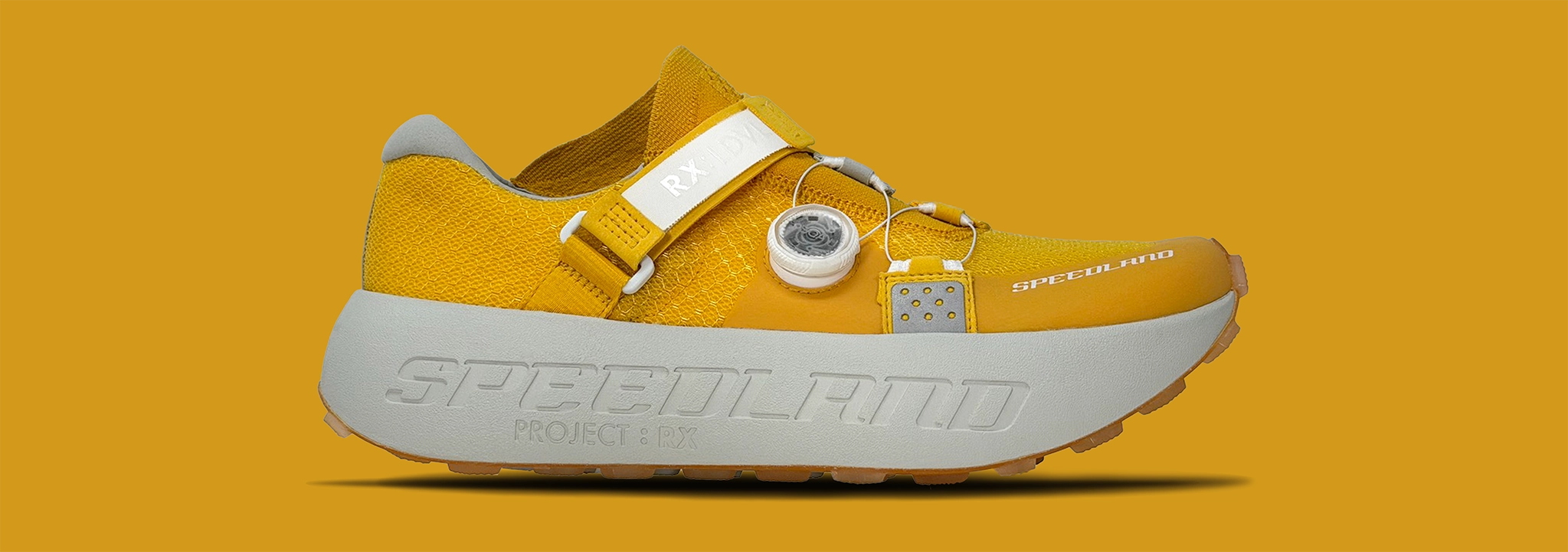
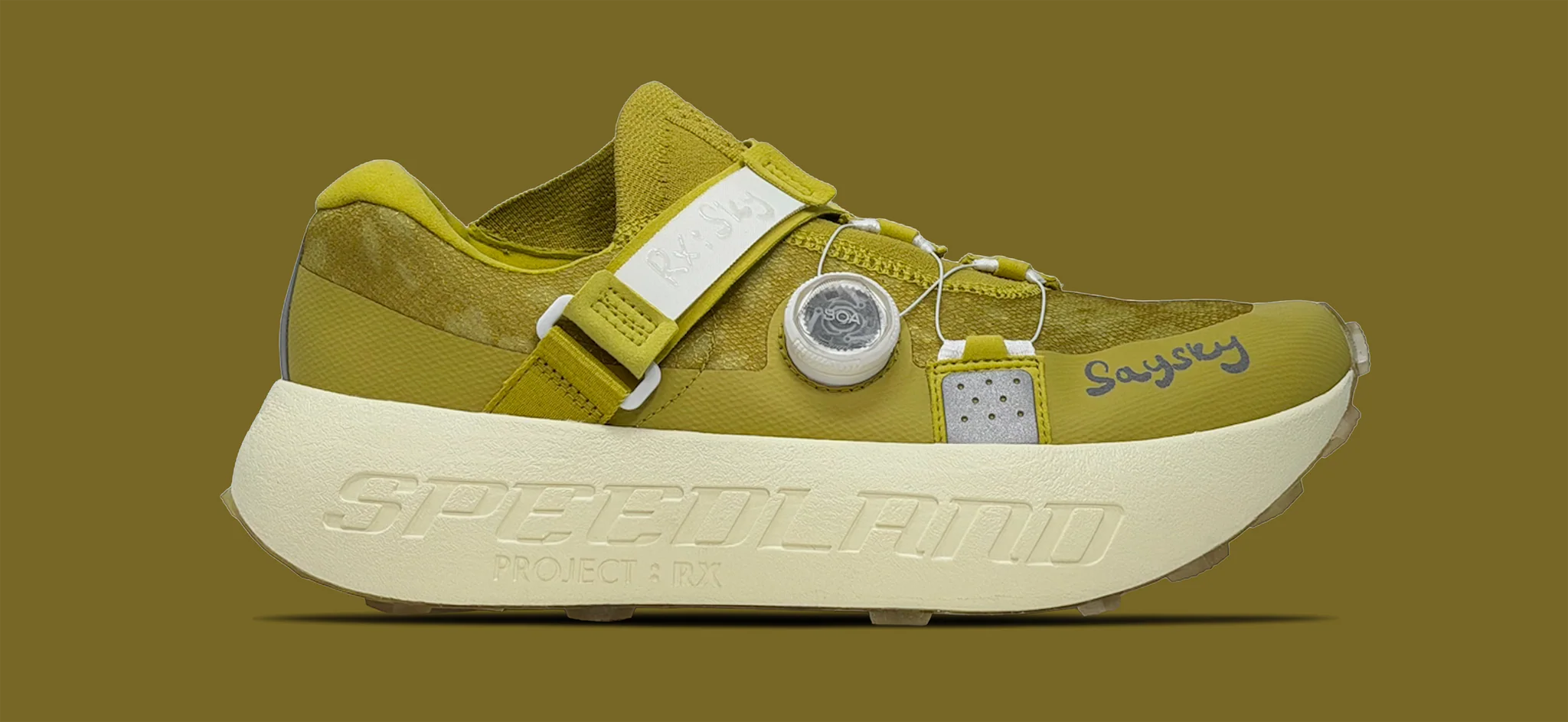
speedland doesn't build shoes for a generic customer, it builds them with specific athletes for specific terrain, then names the shoe after the place. the GL:SVT came out of a collaboration with ultrarunner avery collins and colorado's san juan mountains. the GS:RAR was built with cam hanes for the demands of alaska's backcountry. the GL:PDX pays tribute to speedland's own backyard, portland's forest park trail system. and the RX:SKY, speedland's collaboration with saysky, is the current headline, a hyper-performance trail shoe with a removable rigid carbon plate, a removable drop-in midsole, ATPU foam, the boa fit system, and a glow-in-the-dark upper, built to shift from daily trainer to race-day equipment.
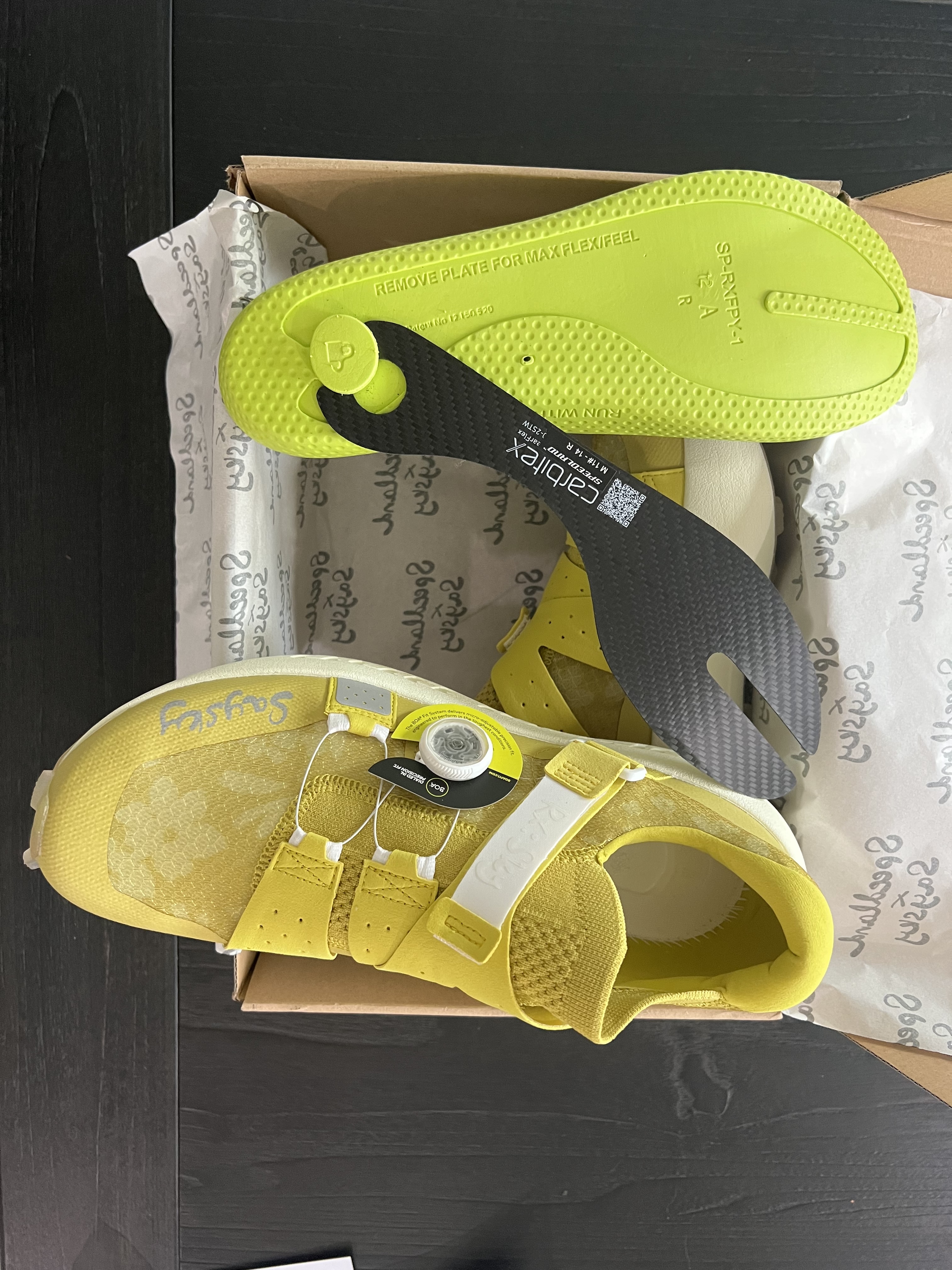
the rx:sky, speedland's collaboration with saysky, fresh out of the box.
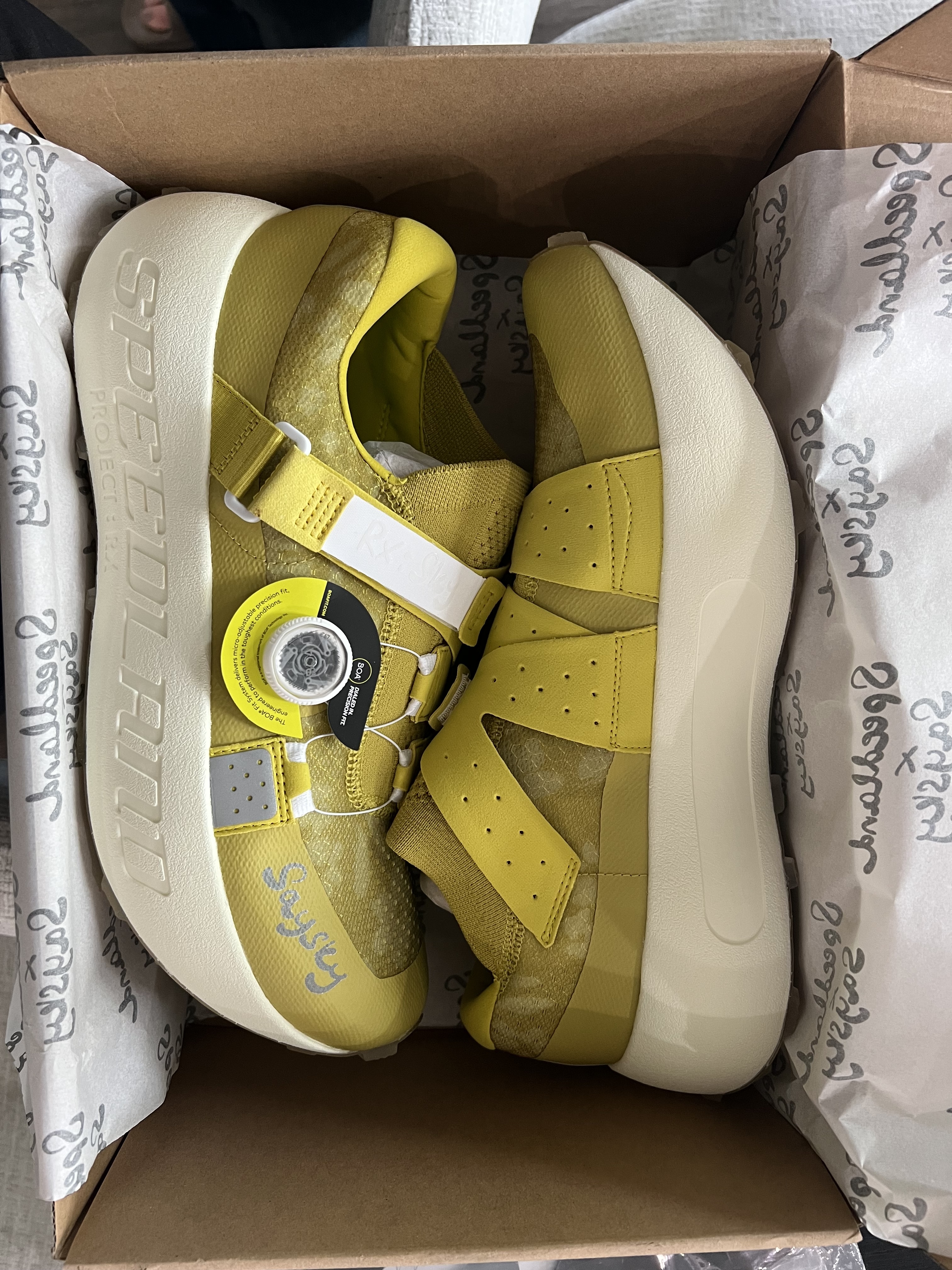
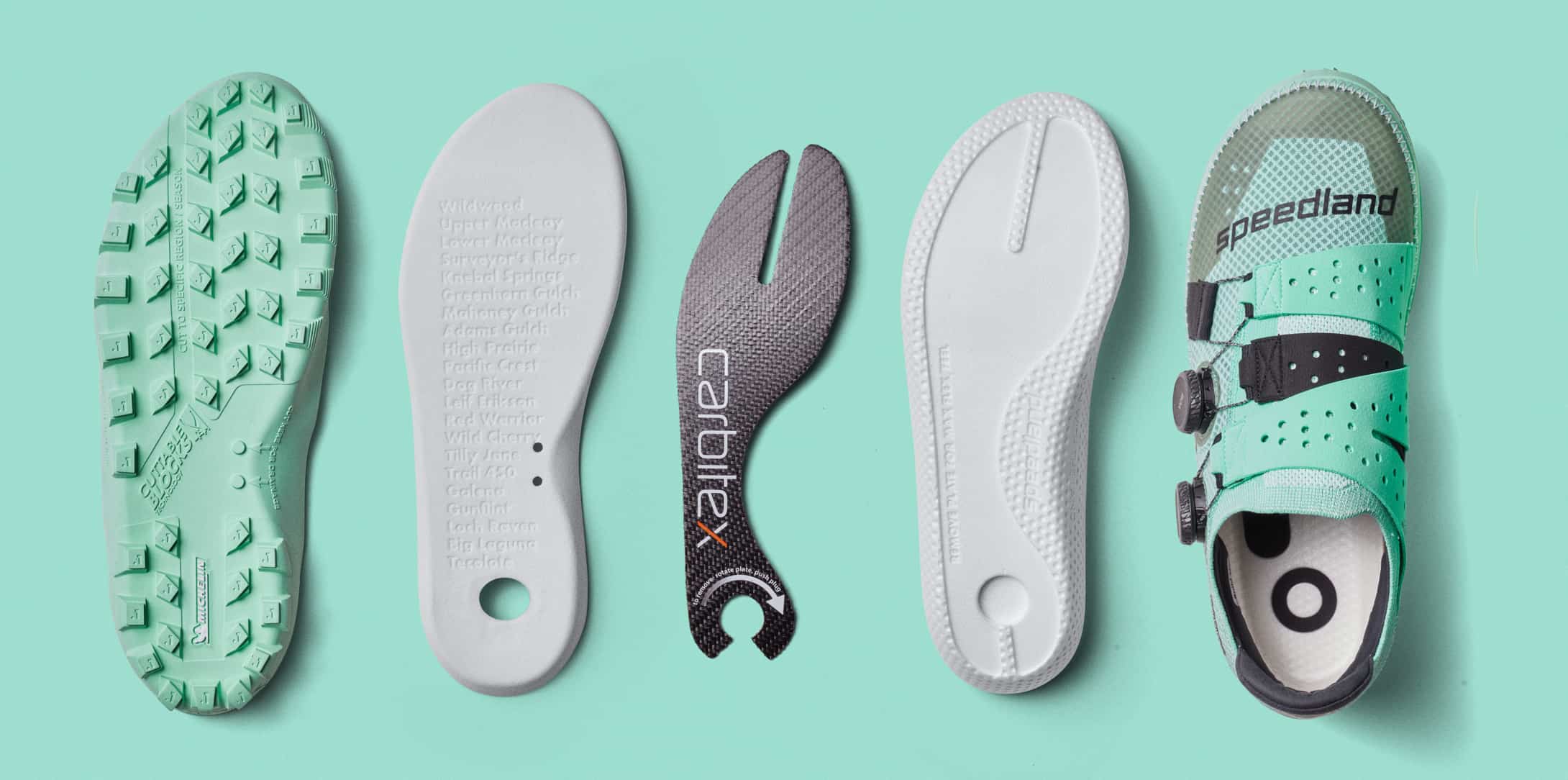
a closer look at the rx:sky's glow-in-the-dark upper and drop-in midsole.
the most personal of these collaborations might be the GS:TMT, built with musician and ultrarunner ben gibbard of death cab for cutie. the shoe is named for washington's tiger mountain trail, gibbard's home training ground and the same terrain that feeds into races like cascade crest. speedland was explicit that this wasn't a celebrity endorsement, gibbard has finished more than 20 trail races and multiple ultras since 2012, and the collaboration came out of his actual relationship with those trails. speedland paired the release with a trail work day alongside the washington trails association, and ten percent of profits from every launch go to outdoor programs chosen by the partner athlete, a practice they've kept across all their collaborations.
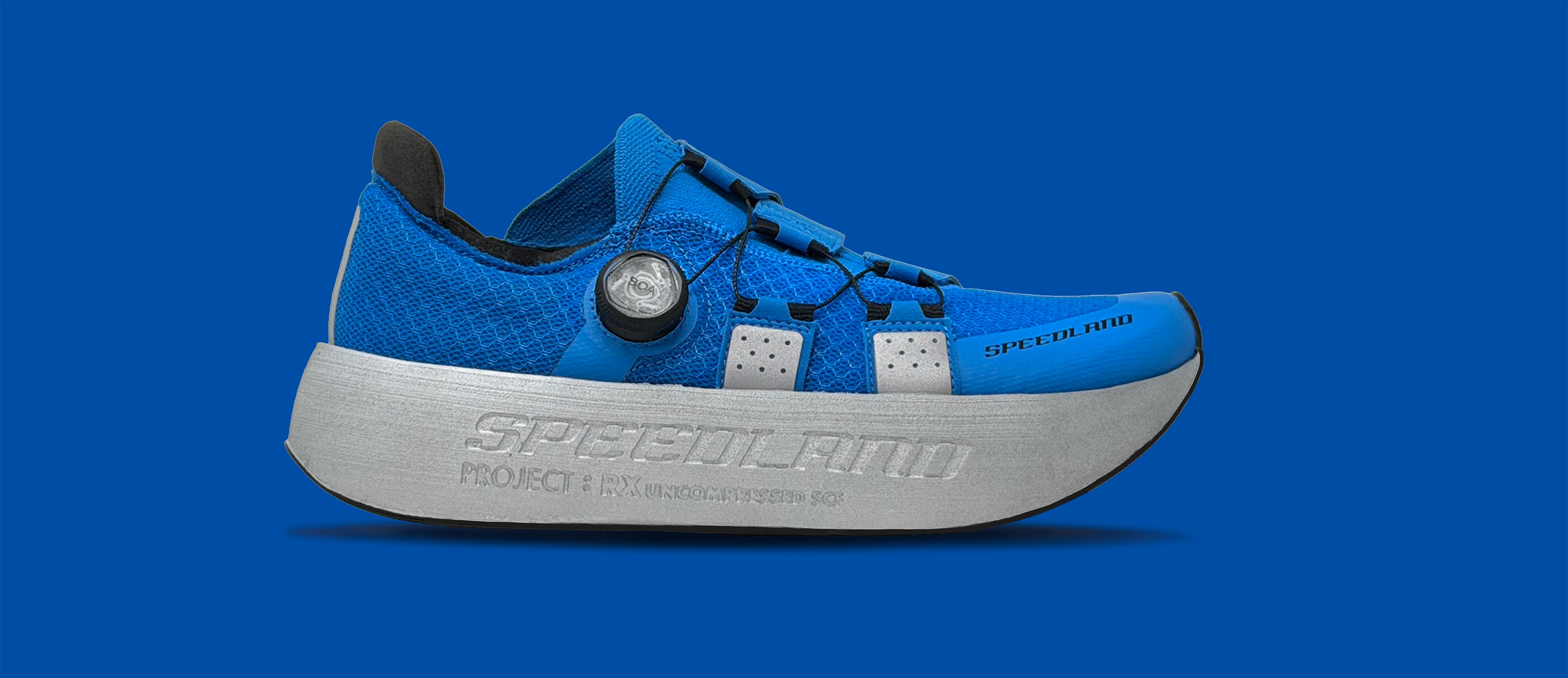
they've also built the RX:PNW, a road shoe developed to support trail athletes through road training blocks, using what early feedback suggests is their best foam yet, an uncompressed supercritical foam built to maximize energy return.
the performance philosophy across the line breaks down into three things. fit comes from the boa system paired with an upper velcro strap, giving a multidirectional lockdown so pressure distributes evenly across the foot and adjusts on the go.
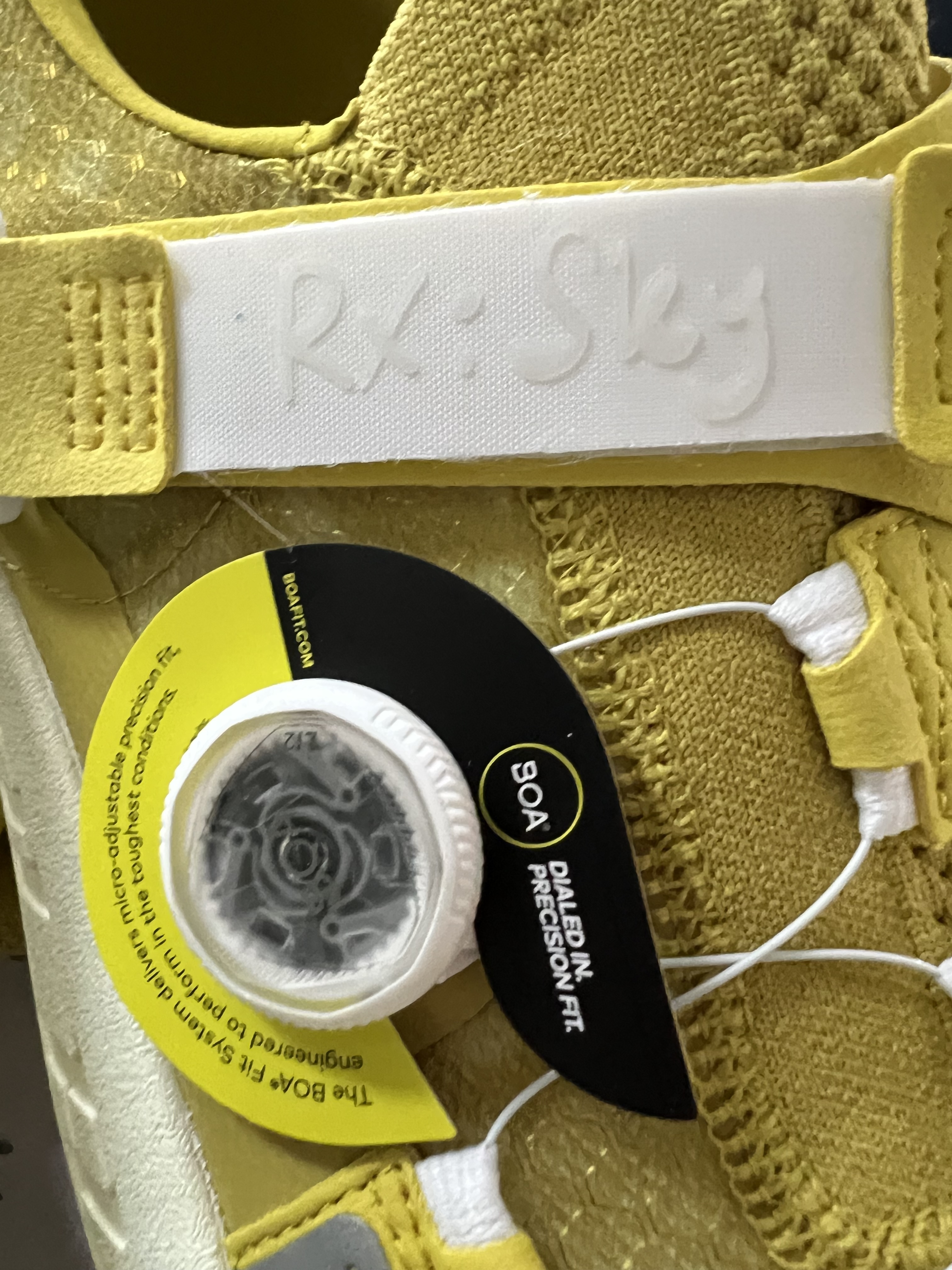
the boa li2 fit system on the rx:sky, dialing in a multidirectional lockdown.
traction comes from michelin's outsole, built with a lug pattern that holds up across wet rock, loose dirt, and everything in between. and the responsiveness comes from a removable carbitex plate, giving snap and pop when you want it, with a simple twist to pull it and run on foam alone on the easy days.
lean by design. two founders, two contractors handling sales, events, and customer service. currently in around 40 specialty retail locations, and selective about it. they favor stores where the staff actually understands the technical features of the shoe, and they don't proactively push for shelf space. they let consumer demand drive the partnership conversations instead.
on europe: the saysky collab opened that door. the partnership came out of a connection with elite athlete don reichelt, who worked for saysky, and it let speedland test the european market with saysky handling the creative and distribution over there. they intend to expand into europe eventually and remain genuinely curious about the european consumer, but u.s. growth is the near-term focus.
most business partnerships don't survive a bad quarter, let alone 25 years. that kind of trust doesn't get manufactured, it gets earned, one shoe at a time, in a loft space down the hall from where chris king is still cutting metal every day. speedland isn't just two guys who decided to start a company together. it's the product of a partnership that had already survived everything a career in footwear could throw at it, and finally found a place to build something entirely on its own terms.
our take
speedland invests in runners, not marketing. real feedback from real athletes, turned into a consistently better product, and enough honesty to admit when an idea like the cuttable lugs didn't land the way they hoped. in a category getting louder and more expensive by the season, that kind of restraint is refreshing. and they're doing it bootstrapped, on their own terms, which is exactly the kind of brand we'll always root for. two people with two decades of experience together, who know how to build a shoe, building it the hard way because it's the right way.