a precision fuel & hydration sweat test measures how much sodium you lose per litre of sweat. mine came back at 962mg, which is almost exactly average. the more useful number turned out to be a different one: at 75 degrees, moderate pace, one hour outdoors, i lose 3.5 pounds of fluid. multiply those together and i am losing roughly 1,530mg of sodium an hour, which is nothing like average. that means i need to personalize my fuel and hydration strategy if i want to perform to the best of my ability. the test is worth doing. it also only gives you half of what you need, and the other half you can measure at home for free.
disclosure: precision fuel & hydration ran the sweat test for us at no cost. we are not an affiliate, so we earn nothing from anything on this page. neither buys coverage. our take is our take.
i was sure i was a salty sweater
my dog, roxanne, licks the salt off my legs after every run. every single one. she waits by the door for it. so when sean o'mahony sat me down for the test on august 14, i went in expecting a number near the top of the range. based on rox treating me like her own personal salt lick, that seemed like settled evidence.
then my result came back at 962mg per litre. the average across precision's testing population is 991. the lowest they have recorded is 205 and the highest is 2,334. i landed right in the middle of the bell curve, labeled a moderately salty sweater, and i will admit i was a little disappointed. i wanted an interesting result. i got the most ordinary one available.
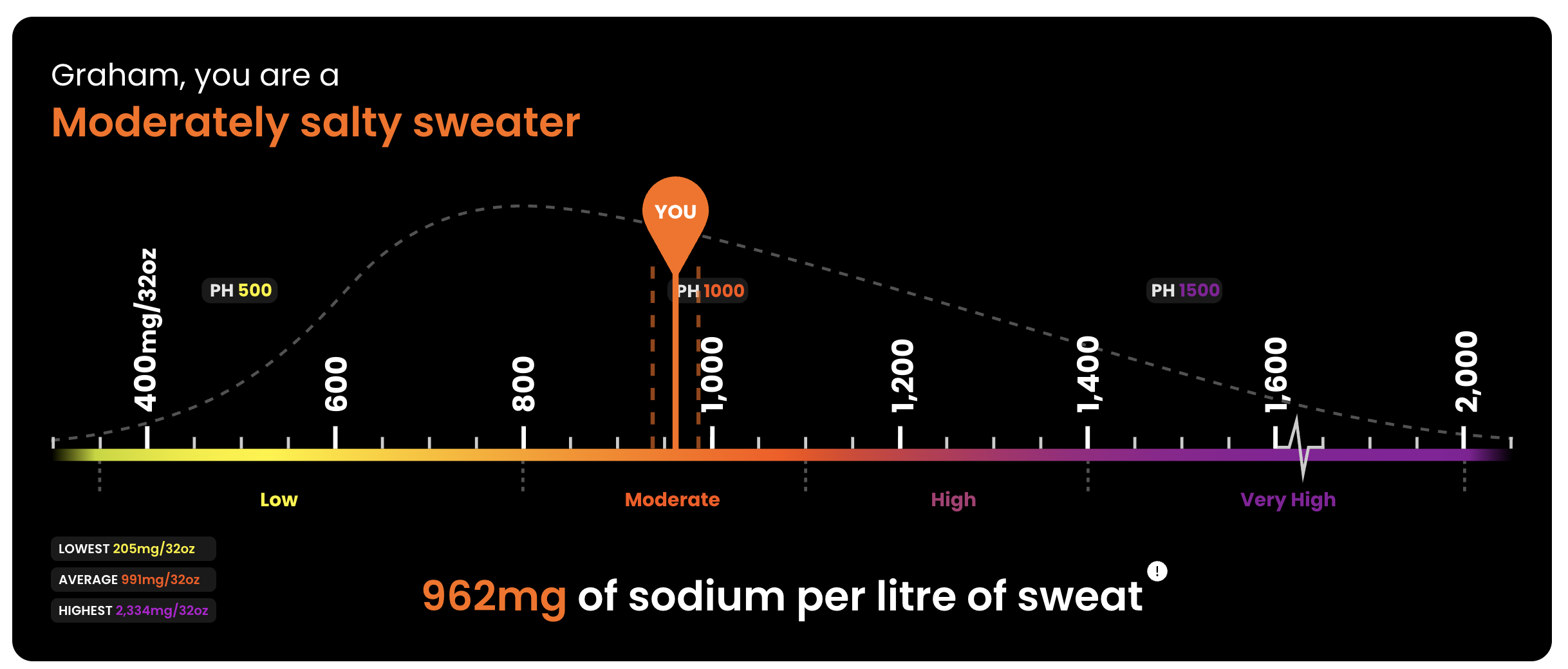
the result, plotted against everyone else they have tested. moderately salty, which is a fine thing to be and a boring thing to read.
what the machine actually does
the test itself is quick and there is nothing athletic about it. no running, no sweating on demand, no treadmill. the machine stimulates a small patch of skin on your arm to produce sweat, collects it, and reads the sodium concentration. it was originally built to diagnose cystic fibrosis, and andy blow licensed it for sport after a doctor friend gave him a test and he saw what came out of it. you walk out with a number and a set of recommendations built around it.
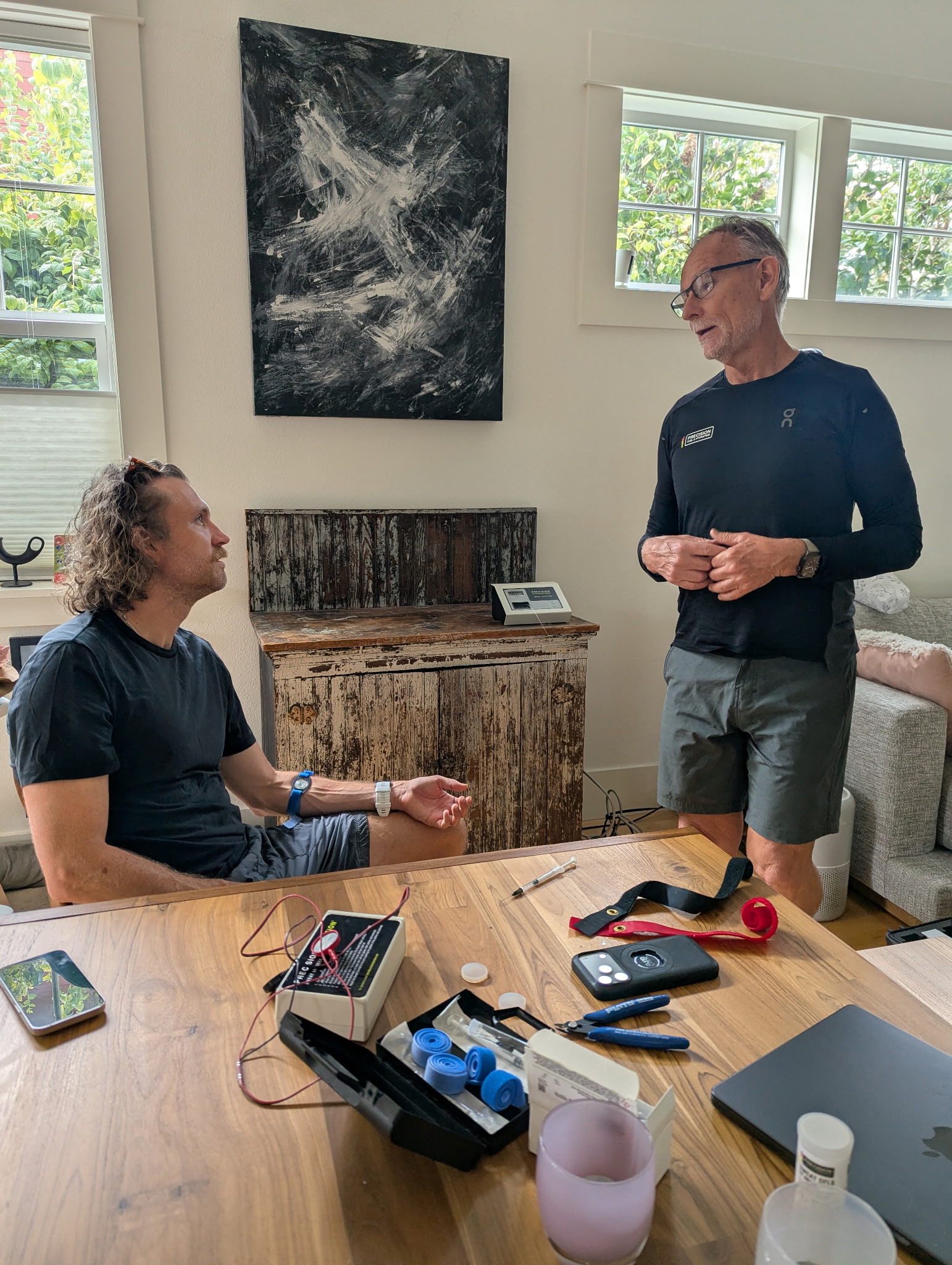
sean o'mahony, running the test on site.
worth knowing: the machines are expensive, and that is a real barrier to getting tested. precision handles this by running seminars, and sean's team gets out to shops and events regularly. if you run a small shop and cannot justify the equipment, it is worth asking pf&h what is possible. that is a question for precision, not for us.
the number does not move
even though i was a little deflated to have a scientific test report me as average, there is a key part of this that changed how i think about it. according to precision, your sweat sodium concentration is largely genetic and barely shifts across your lifetime, on the order of a few percent. it is not something you can train and it is not something you eat your way into.
people have tried to prove that wrong. sean described athletes drinking multiple servings of ph 1500 before a test to see if they could move the reading. it comes back the same. truly independent research on the point is still somewhat lacking, but precision has published a peer-reviewed study that put fifteen trained athletes through four separate sweat tests over a period of weeks and found the readings held, with a coefficient of variation of 5.5 percent. their data, independently reviewed.
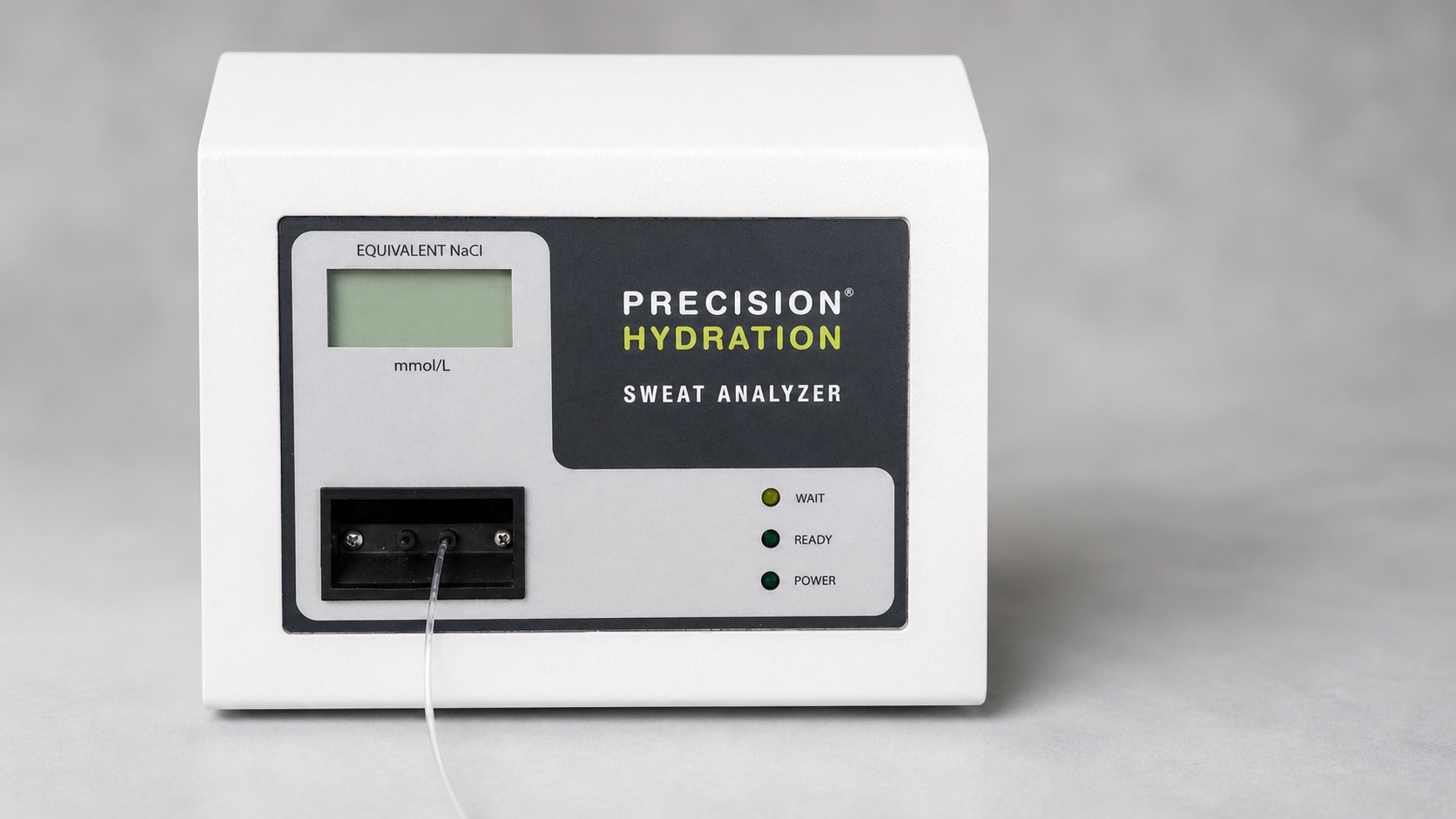
the equipment. built for hospitals, licensed for sport.
which reframes the whole thing. you take this test once. the number is a constant, not a variable, and a constant is only useful if you know what to multiply it by.
the half i had never measured
i had never weighed myself before and after a run. not once. it had not occurred to me that fluid loss was a big piece of the equation, which in hindsight is a strange gap given i'm regularly on trails for hours and have more than a few 100K+ finishes behind me.
so i did it. 75 degrees, not humid, outdoors, one hour at moderate pace. down 3.5 pounds. that is 1.59 litres in an hour, in conditions i would describe as pleasant. precision's own worked example uses roughly one litre an hour as a typical warm-weather running rate, so i am about 60 percent above that on an easy day. not a hot day. not a hard day.
then i did it again. an outdoor warmup into a thirty minute treadmill workout, another hour, down 3.6 pounds. near enough identical to the first, which is exactly what i wanted to see. the scale is not lying to me.
962mg per litre times 1.59 litres is about 1,530mg of sodium an hour.
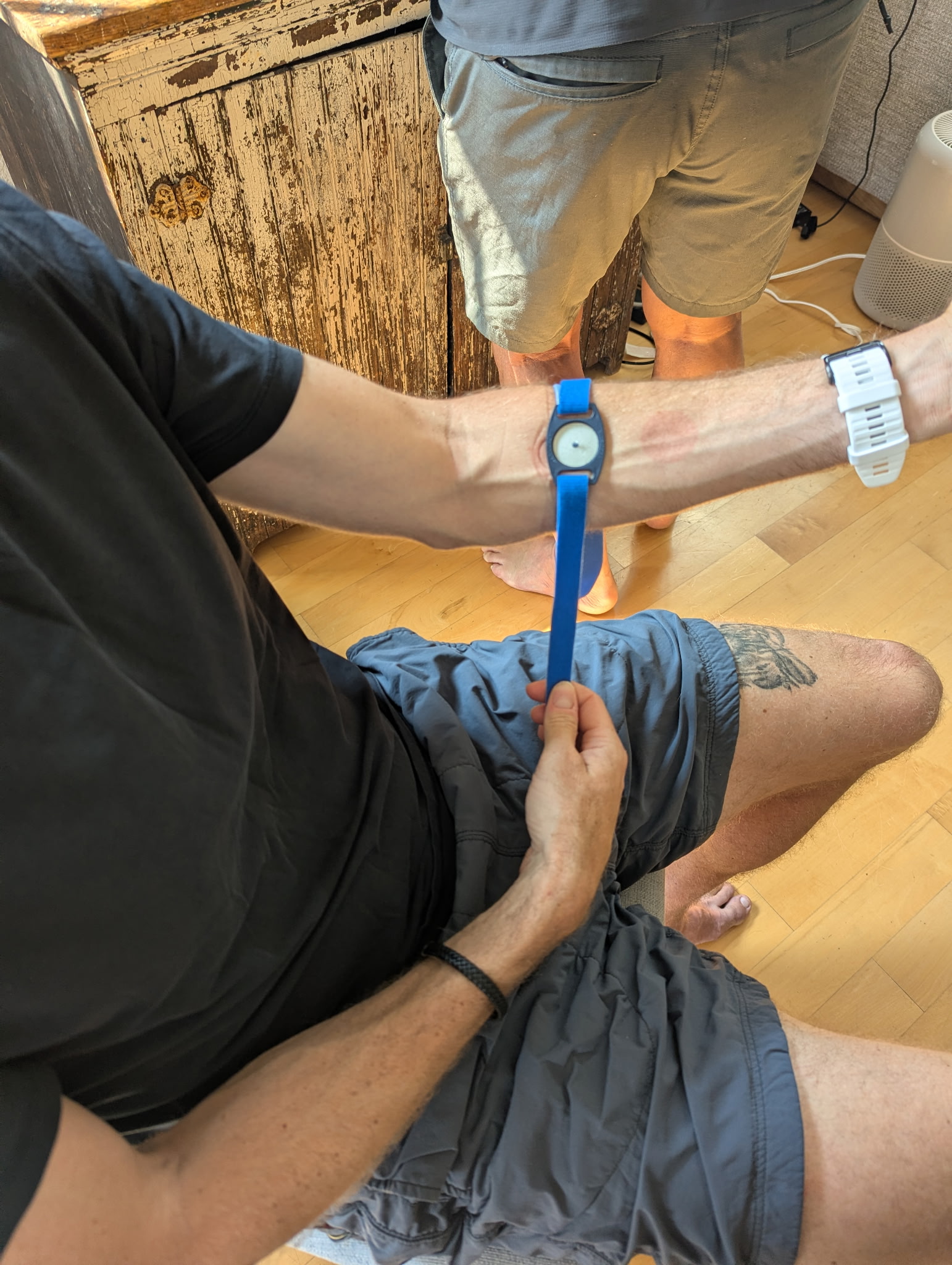
sensors on, sitting still. in the running for the least athletic thing i have done all year.
and then there is the weight math, which is the part that actually got my attention. precision's guidance is to finish within two percent of your starting body mass. i weigh 155 pounds, so my ceiling is 3.1 pounds. i lose 3.5 pounds an hour. drinking nothing, on a mild day, at an easy effort, i cross the line where performance starts degrading in about fifty three minutes.
your fluid loss will fluctuate quite a bit based on conditions. a hot and humid day in the midwest is a different thing than a cool, rainy day in washington state. and it moves inside a single hour too. i could feel my rate climb the moment i started pressing hard, even though the hourly total came out about the same. and i have run entire long runs on less water than that math says i need for the first hour.
so i am going to keep standing on the scale, and change one thing at a time. hot days and cold ones, easy and hard, and eventually a long day in the mountains where it actually counts. it costs nothing to measure and i want to know how wide the spread gets.
the preload
i had been thinking about sodium as a running total, a number to hit. sean's answer was that the body does not work that way.
your kidneys don't count milligrams. they respond to how concentrated your blood is.
— sean o'mahony, precision fuel & hydration
take a strong electrolyte drink in over ten or fifteen minutes and blood sodium rises enough to trip a switch. the brain releases vasopressin, which tells the kidneys to hold water rather than pass it, and the extra sodium pulls fluid out of the gut and keeps it in the bloodstream. the measurable result is a rise in blood plasma volume, three to six percent in the studies. that is more blood to cool you and feed your muscles at the exact moment you start sweating.
sip the same drink slowly across an hour and none of it happens.
each mouthful is too small to move blood concentration, the kidneys treat it as ordinary intake, and most of the water goes straight through you. same sodium, same water, no plasma bump.
which explains something i had never thought to question. drinking plain water before a race does not just fail to help. it suppresses that same hormone, so you hold on to less than you otherwise would. every pre-race trip to the portaloo is the system working exactly as designed.
there is a ceiling on this. a study comparing four concentrations found the strongest, around 3,680mg per litre, gave six of its eight athletes diarrhoea, while the weakest caused none. typical sports drinks sit at the far other end, 200 to 500mg per litre, too dilute to move blood volume at all. andy blow settled on 1,500mg per litre as the strongest concentration that still does the job without wrecking your stomach, which is where ph 1500 gets its name. the recipe sean gave me is 500ml of ph 1500 about ninety minutes before the start, drunk in one go rather than nursed, and finished at least forty five minutes out so it is absorbed and anything spare is long gone. same again the night before. precision has written it up in full, with the papers linked.
worth being clear about what that is and is not. the preload is a separate question from what you drink once you are moving, and my 1,530mg an hour is a during problem, not a before one. what i carry for hour four of a hundred k is the next thing i have to work out. but "drink more" was never a plan. the amount, the concentration, and the timing are three separate decisions, and the test only informs one of them.
our take
if you get a sweat test and stop at the number, you have bought half an answer. that is not a criticism of the test, and precision says as much on the results page: the equation they show you is concentration times sweat rate times duration. two of those three are yours to measure, and both are free. all you need is a scale and a willingness to sweat.
so get the test if you can. it gives you the one variable you cannot work out at home, and it gives it to you permanently. then go weigh yourself before and after a run in the conditions you actually race in. for me the test said moderate and the scale said i need to nearly double what i had been taking in per hour. neither number would have told me that alone.
we are running this plan through the fall and into a packed 2027 race calendar, and we will report back once the long days are behind us. more on the company and how andy blow built it in our precision fuel & hydration brand story, and you can find a range of their products on their page here or read more at precision fuel & hydration.