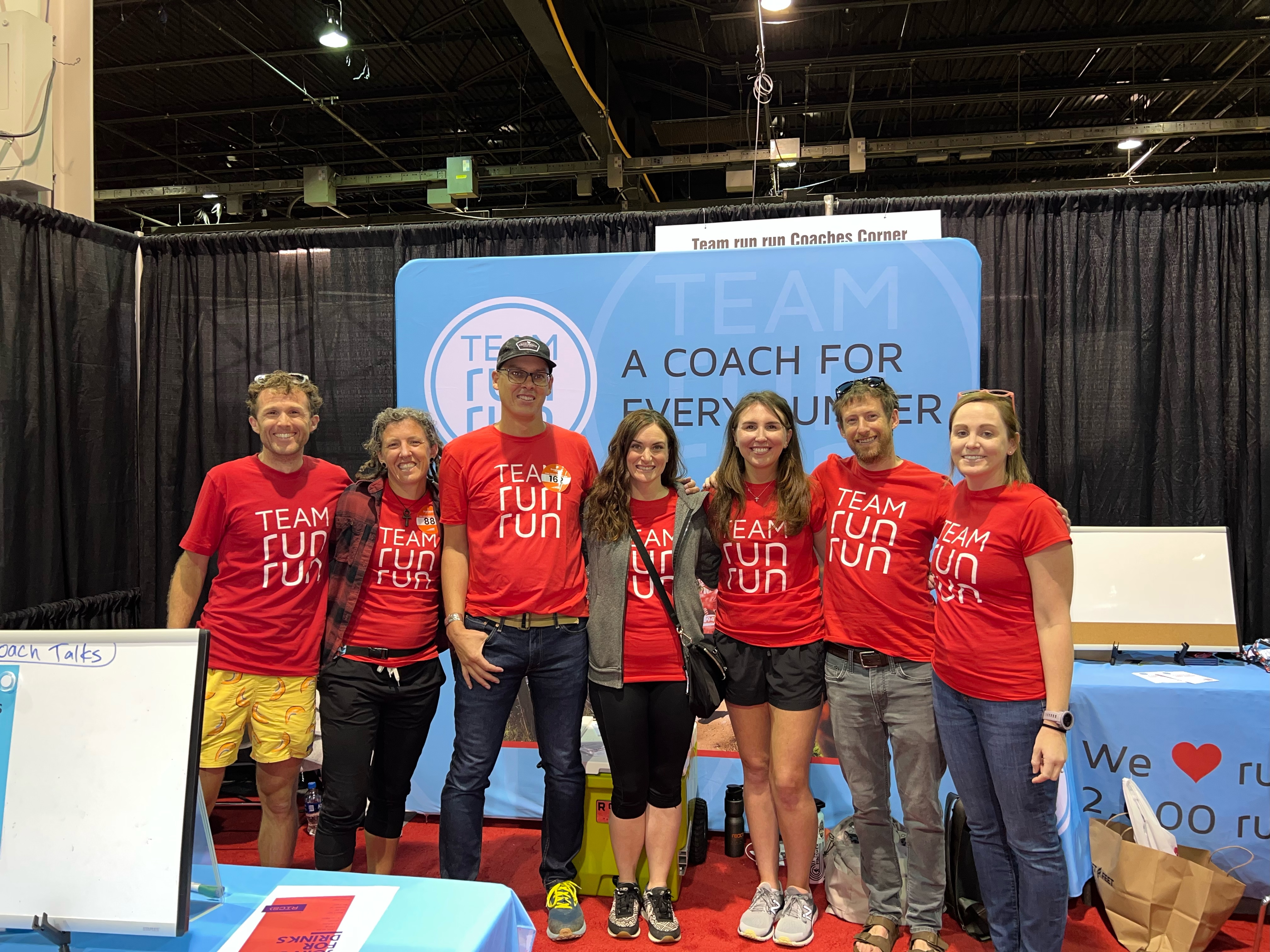
team runrun is a coaching marketplace founded in 2017 by matt urbanski, julie urbanski, and dave scheibel. matt is a former money manager who quit to hike long trails, went to nursing school, got licensed, and then never worked a nursing shift. team runrun (trr) connects runners with human coaches across every distance from the 5k to 200 miles. coaches set their own prices, keep their own training philosophy and methods, and take home almost all of the money. trr handles the business underneath and sends them the runners. that's the part that makes it unusual: the company is not built around matt's training philosophy. it's built around making the relationship between a runner and a coach work, whoever those two people happen to be. 379 coaches on the site today, more than 10,000 runners through the platform since it started, still bootstrapped on nothing but its own revenue.
fifteen runners and a nursing license
the pivot came before the company. matt and julie were both working in money management when they quit, traveled, and went hiking. long hiking. the kind that reorganizes what you think a life is supposed to look like.
nursing school was the deliberate next move, a jump into something completely unrelated to anything either of them had done before. matt started coaching runners in seattle in 2014 while he was in the middle of the program. by the time he graduated and got licensed he had about fifteen runners on his roster and no interest in practicing. he chose the fifteen runners.
for a few years that was the whole thing. matt's own coaching, with julie building the first website and running every operational piece behind it.
team runrun itself was founded in 2017 by three people: matt, julie, and dave scheibel, the seattle ultrarunner best known for stacking mailbox peak repeats. the three of them built it and named it together. dave stepped away within the year, and matt and julie have been 50/50 owners ever since. the name the three of them picked stayed.
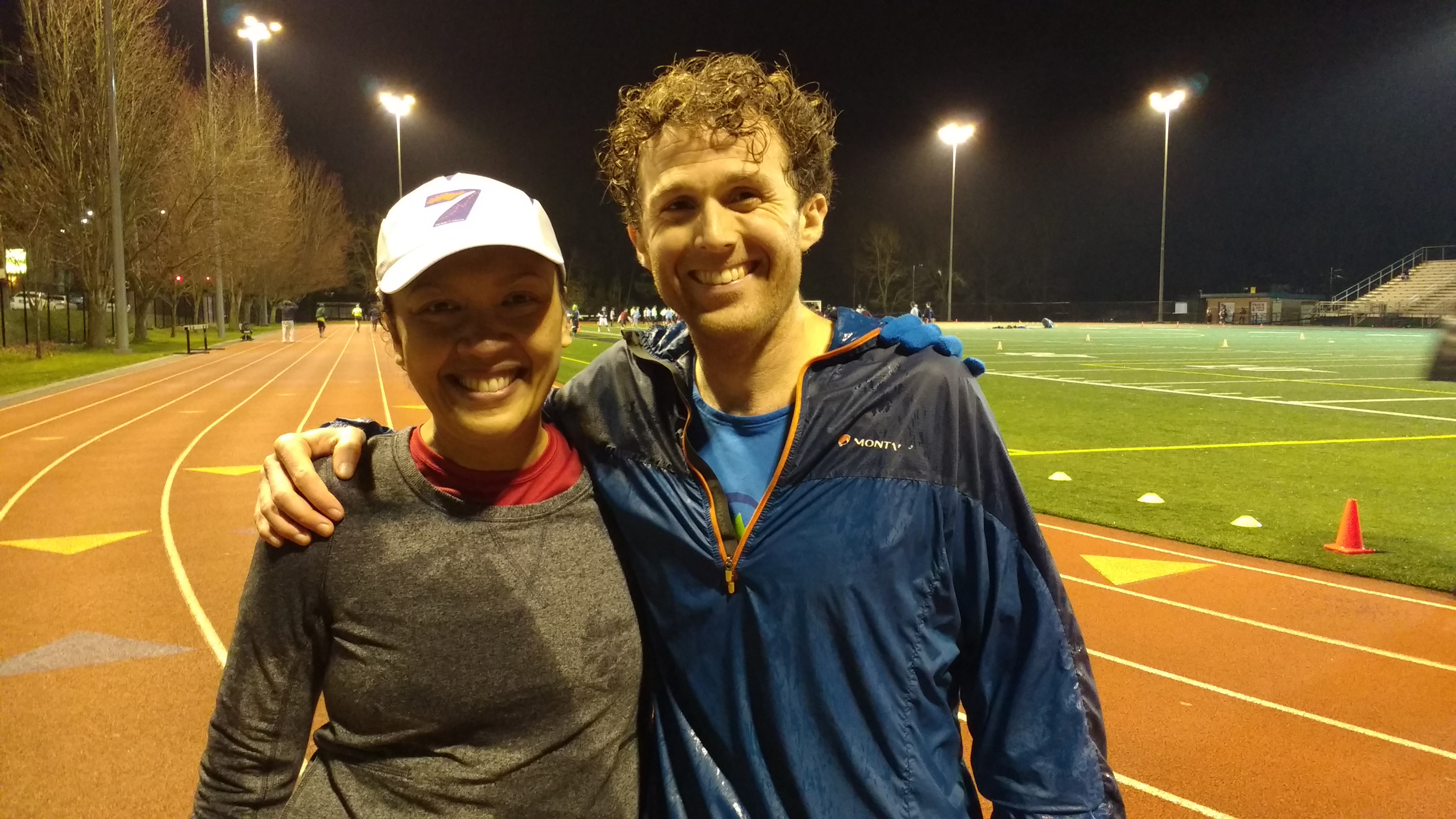
2016. fifteen runners and a nursing license he never used.
i know running, how do i scale this
the marketplace idea didn't come from running. it came from tim ferriss and a stack of seattle tech podcasts, absorbed by a guy who already had a skill and wanted to know what to do with it.
i know running, how do i scale this?
— matt urbanski, team runrun co-founder
the obvious answer would have been to franchise himself. hire coaches, teach them the urbanski method, sell the method at volume. that's what scaling a coaching business normally means, and matt never went near it. his own athletes stayed a separate concern from the marketplace, and no coach who joined was ever asked to coach like him. what trr sells isn't a system. it's the conditions under which two people can build a real working relationship, and then it gets out of the way.
the marketplace itself opened in 2018. the first coaches were friends and friends of friends. keith laverty in seattle. a few others. the early product was more conventional than what exists now: tiered packages, bronze silver gold, defined call limits, an email-only option at the bottom. it didn't last. it was impossible to police, and it was fundamentally the wrong offer for the thing being sold. the marketplace is there to facilitate the relationship, and the rigid tiers only made the runner's experience worse. you cannot put a communication cap on a relationship and expect the relationship to survive it.
so trr scrapped tiers entirely and replaced them with one rule that still governs the platform. coaches define their own communication terms, whatever those terms are, and then they do exactly what they said they would do. that single swap is the clearest statement of belief the company has ever made.
the tipping point arrived in the early 2020s, when strangers started applying to coach on the platform at two or three a week. an interview and onboarding system got built from scratch to handle it and keep the energy and culture in line with the team runrun brand. there's now a sales team going out and recruiting coaches on purpose.
the money took longest to come around. the marketplace didn't out-earn matt's personal coaching until around 2022 or 2023. for the first eight to ten years his own athletes paid the bills while everything the marketplace generated went straight back into advertising and driving runners to the coaches. only recently has it become, in his words, its own beast.
on the journey, in both directions
ask matt what he's selling and he won't describe a training plan. the philosophy is to be on the journey with the athlete rather than out ahead of it holding a clipboard. when a runner says they want to do a 200 miler and then a 100 miler on the far side of it, the response isn't a lecture about periodization. it's a question about constraints, and then a plan for getting it done inside them.
that only works across time, which is why most of his coaching relationships run five to ten years. the accumulated knowledge of a person, their job, their kids, their injuries, their tells, is the actual product. and being on the journey doesn't mean being a yes man. when life genuinely got in the way of a workout he'll say so and mean it. when an athlete has been quietly making excuses for a few months, he'll tell them to stop negotiating with themselves and go run more.
the thing that makes trr more than a directory is that matt applies the exact same ethos one level up. he is on the journey with the coaches too. every month, twenty-five-plus trr coaches get on a zoom call and work through live client problems together. a recent one: a coach whose athlete wanted to pile on volume in the weeks before boston, and a coach who was convinced it would end in an injury. twenty-five people who have all stood on both sides of that conversation talked it through together.
that's a coaching relationship for the coaches. same product, different customer.
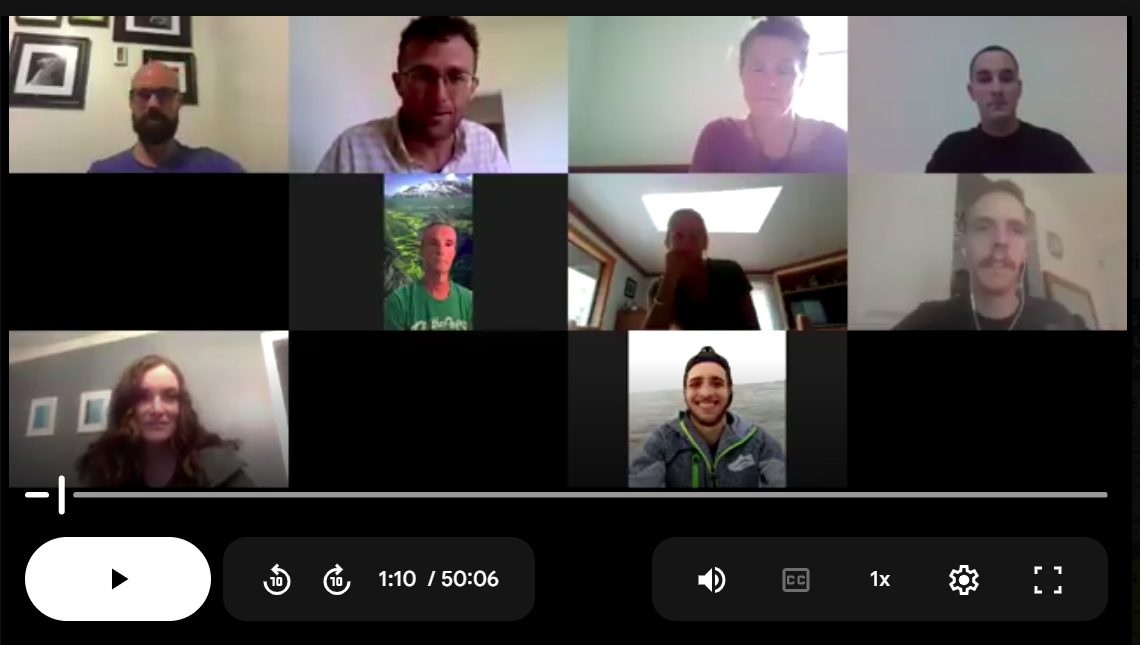
twenty-five-plus coaches, once a month, working through each other's hardest cases.
the 4:30 marathoner from columbus
the hardest lesson in the business is that almost nothing on a coach's resume predicts whether they'll be any good at this.
trr has onboarded high-profile professional runners with forty thousand instagram followers who never convert a client, or can't keep the ones they get. it has also onboarded a 4:30 marathoner from columbus with zero name recognition who built a roster of thirty runners by connecting completely with run-walk beginners training for a first marathon. credentials, race times, and audience size all turned out to be weak signals. connecting with people is the thing.
i want to give people a shot because it's really hard to tell who's going to be good.
so the vetting screens for something else. basic coaching competence gets checked, but the real filter is cultural fit and ethos. trr screens for negativity, because the operating belief is that running should be a genuinely positive force in a person's life, and a coach who doesn't hold that will quietly poison it. a sign-up fee exists to filter out anyone who just wants to throw a profile up and see what happens, since the onboarding work is real for the trr team.
after that the system self-regulates. only paying clients who've been with a coach for two months or more can leave a review, which makes the reviews close to impossible to game and worth actually reading. coaches with strong ones grow organically. coaches who struggle early tend not to.
the human lane
matt doesn't dodge the ai question and he doesn't dismiss it. he'll grant that chatgpt would produce a perfectly reasonable answer to most coaching dilemmas, including that boston volume argument. he thinks there's a real space for ai in the sport.
he just doesn't want trr competing for it. the ambition is narrower and more specific than that: to be the definitive place a runner goes when they want a human coach. not the biggest training platform, not the smartest one, the go-to marketplace for the human-to-human version. whatever ai ends up being good at, the value trr intends to own is having someone there who has done it and knows what it feels like.
the business model is built to protect that. trr takes a very small percentage and coaches keep almost all of the revenue, a deliberately low-margin, volume-based structure designed to foster the relationships rather than extract from them. nine years in, the company has never taken a dollar of outside money. slow and steady, as matt puts it.
i'm just about trying to foster these relationships between runners and coaches.
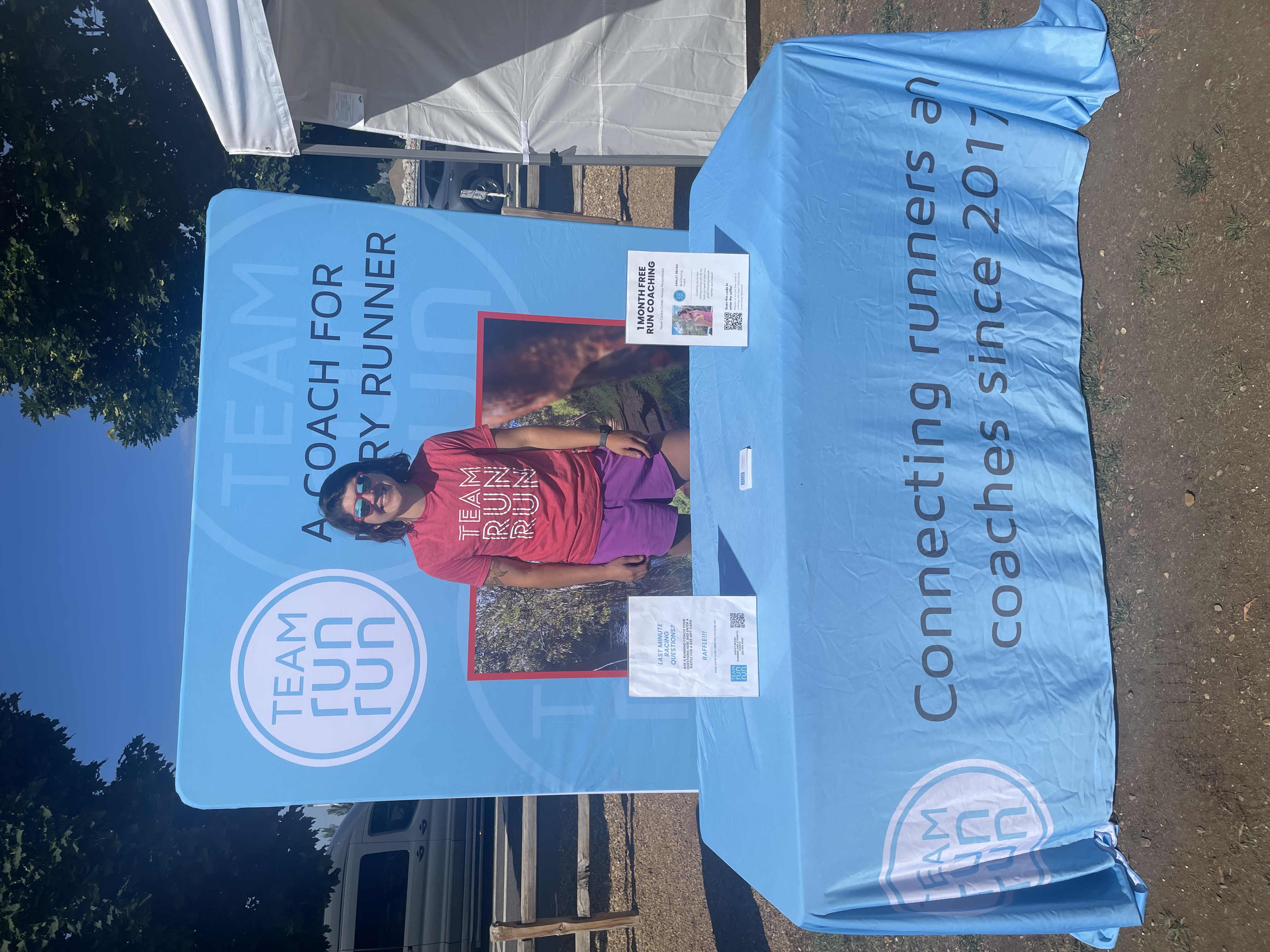
a coach for every runner. the tagline is also the business model.
our take
one of us was coached by matt for three years. that's the disclosure and also the reason this piece exists. the thing that stuck from those years wasn't a single workout or block. it was consistency, and learning to think in seasons instead of single races, which is a lesson you only really get from someone who plans to still be around in five years.
the other one saw his coach move to team runrun and was impressed by the community, the support, and the real team that made it easier to interact with his coach and learn more about the racing and training that mattered to him. the platform provided a run club that was global, with attention and opportunities that felt local.
that's the argument team runrun is making at scale. the market is sprinting toward the cheapest possible version of coaching, and matt has spent a decade quietly assembling the largest group of people who will still pick up the phone. he isn't selling his own method. he's selling the conditions that make a good coach and a good runner find each other and stick. it's low margin, it's slow, and it's the harder business to build. we'd bet on it anyway.